
Executive Summary
In July 2025, the Jewish Federation of San Diego conducted the PULSE Survey to assess the current state of the local Jewish community in the wake of the events of October 7, 2023. Drawing responses from 39 Jewish organizations—including synagogues, schools, advocacy groups, and social service providers—the survey reveals both the resilience and the evolving needs of the San Diego Jewish communal landscape. Across all seven sections, the data highlight an upward trend in engagement, evolving priorities, and increasing urgency around safety, identity, and collective connection.
Section 1. Organizational Engagement and Program Interest
Since October 7, 79% of organizations have reported increased overall engagement, with 77% noting an influx of new participants. Adults aged 35–64 have driven the largest gains, though young adults, teens, and seniors have also shown heightened involvement. Organizations responded with a range of new or adapted programs including mental health resources, Israel advocacy, spiritual support, and enhanced security measures. Among membership-based organizations, 57% experienced growth in membership, and 72% saw increases in attendance. While Jewish school enrollment saw modest changes, security concerns and affordability emerged as key barriers to engagement.
Section 2. Connection and Community
More than half of the organizations reported increased fundraising and volunteerism since October 7. Many described a deepened sense of community, with greater solidarity, donor engagement, and collaboration—especially among local Jewish institutions. However, collaboration with non-Jewish organizations remained largely unchanged. Organizations cited shared crisis response, leadership shifts, and communal needs as motivators for stronger Jewish inter-organizational partnership, though political and logistical constraints sometimes limited external collaboration.
Section 3. Safety and Wellbeing
Security needs have risen sharply, with 88% of organizations reporting increased security needs and many allocating larger shares of their budgets toward safety. Collectively, over $7 million was spent on security in the past year. Despite rising costs, most organizations still spend less than 10% of their budgets on security. Mental health concerns have also increased—90% of organizations report growing distress among constituents. Staff turnover remained relatively stable. Together, these trends underscore the dual challenge of maintaining physical safety and addressing emotional wellbeing.
Section 4. Antisemitism and Its Impact
An overwhelming 98% of organizations reported increased concern about antisemitism. Nearly half (41%) had been directly affected by incidents including bomb threats, vandalism, harassment, and online hate. These experiences led to expanded security, discreet programming, and a mix of caution and defiance in public Jewish expression. Many organizations also enhanced educational initiatives, partnered with law enforcement and advocacy groups like ADL and SCN, and sought support from community coalitions. While 84% of organizations feel confident in their ability to respond to threats, disparities in readiness persist.
Section 5. Engagement Around Israel and the Conflict
The majority of organizations communicated about the Israel-Gaza conflict through email, social media, sermons, and gatherings. Communication frequency varied, though most operated on an “as-needed” basis. While some organizations navigated internal tensions and fatigue, others leaned into advocacy and education. Responses to these efforts were largely positive (82%), although a few organizations encountered mixed or negative feedback. The need for nuanced, inclusive, and emotionally aware communication strategies remains evident.
Section 6. Blueprint for Our Future (2022 San Diego Community Study)
The 2022 Jewish Community Study: A Blueprint for Our Future has played a meaningful role in guiding decision-making across many San Diego Jewish organizations. While not universally integrated, the study has proven to be a valuable resource for shaping strategic priorities, informing programming, and grounding conversations in data-driven insights. Over one-third of respondents reported using the Blueprint frequently or meaningfully, and many others acknowledged turning to it for occasional reference—particularly when designing outreach initiatives, allocating resources, or evaluating community needs. Priority areas drawn from the study that were most relevant include engagement, identity, security, and Israel connection. Organizations expressed a desire for more training and support to apply the study’s findings effectively.
Section 7. Vision and Future Outlook
Respondents identified key concerns about Jewish life in San Diego, including rising assimilation, unaffordability, antisemitism, fragmentation, and donor fatigue. Top priorities for the next three years included youth and family engagement, Israel education, inclusive programming, strategic partnerships, and organizational sustainability. Despite challenges, many leaders expressed optimism—citing strong leadership, collaborative momentum, engaged youth, and resilience in the face of adversity as reasons for hope. The community’s ability to come together after crisis moments was seen as a source of strength and unity.
Conclusion and Final Observations
The 2025 PULSE Survey offers a snapshot of a Jewish community that is at once energized and sobered by recent events. Amid a landscape of rising engagement, expanded programming, and renewed commitment, challenges persist in the form of safety concerns, rising antisemitism, and uneven resource allocation. Yet the community’s collective resilience, dedication to identity and belonging, and openness to collaboration point to a promising and hopeful future. The survey serves not as a conclusion, but as a guidepost for deeper reflection, strategic investment, and continued communal growth.
Appendix A: List of organizations that completed the survey 52
Introduction
Background and Context
In 2022, the Blueprint for Our Future—San Diego’s landmark Jewish Community Study—provided a comprehensive roadmap for strengthening Jewish life across the region. It offered data-driven guidance to help organizations deepen engagement, foster inclusion, and respond to evolving community needs.
However, the events of October 7, 2023—a devastating attack on Israel—profoundly disrupted Jewish communities worldwide, including San Diego. The aftermath triggered sharp shifts in individual behavior, communal priorities, safety concerns, and expressions of identity.
In response, the Jewish Federation of San Diego launched the PULSE Survey to assess the lasting and evolving impacts of October 7 on local Jewish institutions. Designed as a follow-up to the Blueprint, the PULSE Survey captures how organizations have adapted, what new challenges have emerged, and where opportunities for collaboration and resilience have taken root. This report reflects the voices of Jewish organizations, offering a timely snapshot of a community in transition, grounded in both urgency and hope.
In July 2025, 39 leaders from Jewish organizations across San Diego responded to a rapid “PULSE” survey conducted by the Jewish Federation of San Diego to gauge the state of our Jewish community. These organizations—representing a wide and diverse cross-section of our Jewish communal ecosystem, including synagogues, day schools, youth programs, advocacy groups, service providers, and cultural institutions—were specifically invited to participate based on their leadership roles and their deep understanding of their own organizations.
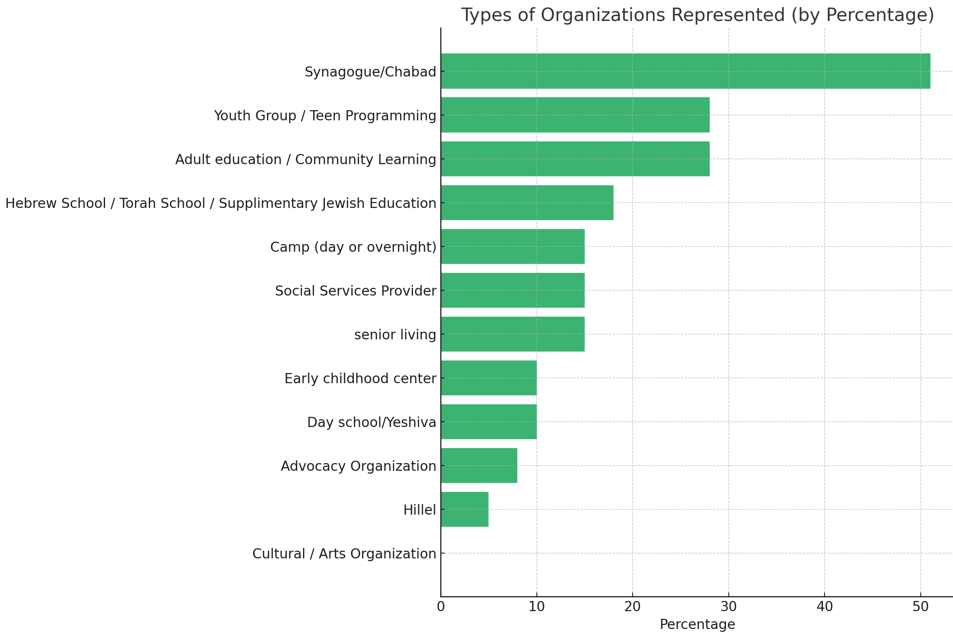
People your organization served:(Note: some organizations responded to this question with numbers of families served. The Blueprint for Our Future: San Diego Community Study identified the average size of a family in the San Diego Jewish community as 2.4. For the sake of consistency, this report utilizes that conversion (2.4) as the number of people/family served).
A 32% increase in the number of people served.
59% of organizations reported an increase in people served.
10% of organizations reported a decrease in people served.
31% of organizations reported no change in the number of people served.
Approximate size of your organization’s staff:
51% of organizations report an increase in their staff size
13% report staff size decreasing
36% report no change in the number of staff
Section 1: Organizational Engagement and Program Interest
Since the events of October 7, Jewish organizations across San Diego have reported a notable surge in engagement, with increased participation, new membership, and heightened interest across diverse age groups. This section explores how organizations have responded—both by adapting existing programs and launching new initiatives—to meet evolving community needs. It also highlights demographic trends, attendance shifts, and barriers to participation, offering a snapshot of how local institutions are fostering connection, resilience, and belonging in a rapidly changing environment.
How has overall engagement in your organization changed since Oct 7?
The data indicates a strong upward trend in overall engagement across organizations:
56% of respondents reported that engagement increased somewhat, while 23% observed a significant increase.
In total, 79% of organizations experienced a rise in overall engagement.
15% indicated engagement has stayed about the same, and only 5% reported a decrease.
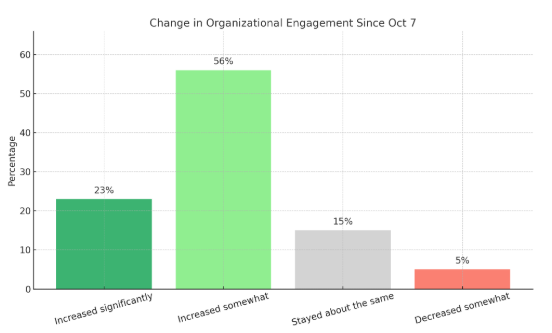
Overall engagement has substantially increased since October 7, with nearly 4 out of 5 organizations reporting higher levels of involvement—reflecting a heightened sense of connection or urgency within the community.
Since Oct 7, to what extent are new people showing up?
The data reveals a notable increase in new individuals engaging with organizations since October 7:
59% of respondents reported that new engagement has increased somewhat, while another 18% observed a significant increase.
Combined, 77% of organizations are seeing more new people showing up.
15% reported that new engagement has stayed about the same.
Only 8% noted a somewhat decreased level of new engagement.
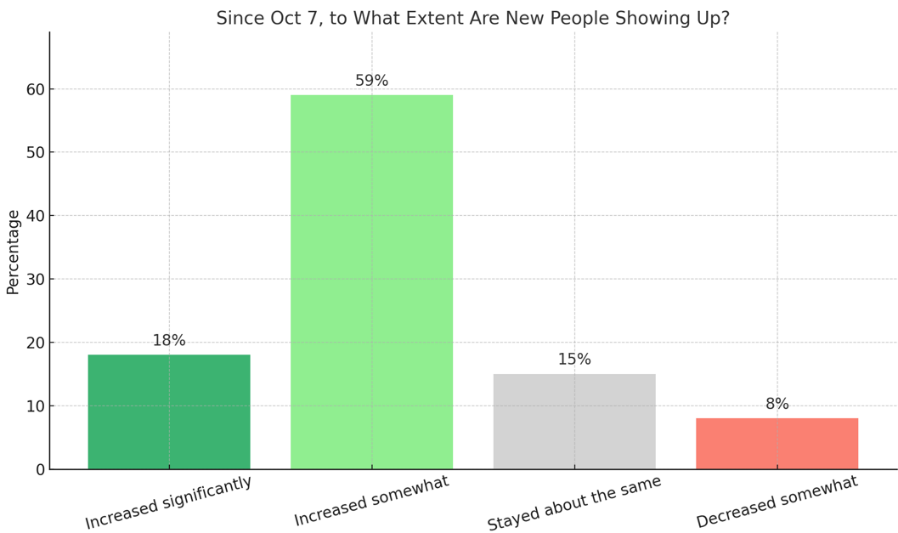
The results point to a clear trend of rising community interest and participation, with more than three-quarters of organizations experiencing some level of increased new engagement post-October 7.
Which age groups have shown the most change in engagement?
The data reflects a broad-based increase in engagement across multiple age groups for many organizations following October 7:
The 35–49 age group showed the most reported change in engagement at 54%, followed by:
Adults aged 50–64 at 46%
Young adults (18–34) at 41%
Older adults (65–74) at 31%
Teens (13–17) at 21%
Other entries were cited in 28% of responses
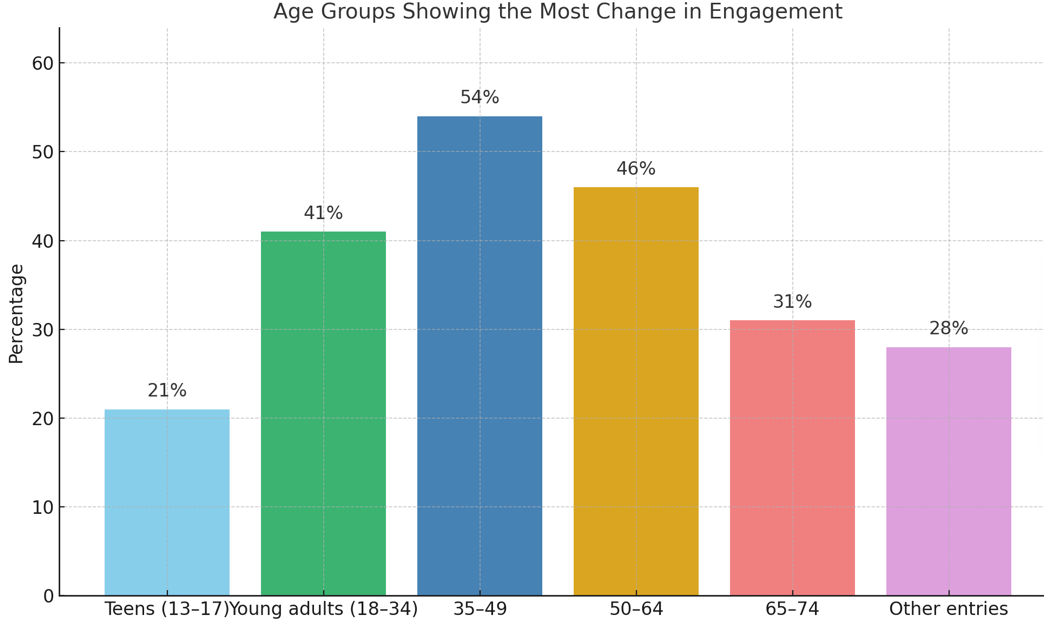
Many organizations reported that engagement increased across nearly all age groups, suggesting a community-wide response to recent events. While adults between 35–64 appear to have led the increase, notable rises in engagement among young adults, older adults, and even teens indicate a widespread surge in communal connection and participation. This reflects a strong collective impulse to come together during times of uncertainty and crisis.
Describe any new programs you introduced in response to changing interests since Oct 7.
Organizations in the San Diego Jewish community have implemented a wide range of new programs and adaptations in response to the changing interests and emotional needs following October 7. The responses reveal a diverse and dynamic effort to address rising community concerns, foster connection, and show solidarity with Israel.
The following key themes emerged from the data:
A. Increased Communication and Advocacy
Many groups expanded Israel education, antisemitism awareness, and advocacy training.
Programs like Courageous Conversations and lecture series on Israel-Palestinian history emerged.
B. New Programming for Specific Demographics
Young adults (20s–30s): Torah classes, cohort programs, leadership development.
Teens: Engagement in response to antisemitism, Israel-focused trips, BBYO groups.
Parents and families: Support groups, conversations around school safety, commemoration events.
Seniors/empty nesters: Renewed interest in adult education and Israel-related events.
C. Solidarity and Commemorative Events
Community-wide gatherings, October 7th memorials, candlelight vigils, and prayer events were widely organized.
Multiple organizations organized solidarity trips to Israel or modified existing Israel travel to reflect current realities.
D. Mental Health and Spiritual Support
Many groups provided mental health resources, grief support (especially regarding Israel and antisemitism), and “chizuk” (strength) programs.
Hillel and schools focused on creating safe Jewish spaces for students and young adults.
E. Security and Safety
Schools and organizations applied for security grants and increased training for staff and community members.
F. Services for Israelis and Immigrants
Several organizations supported Israeli evacuees relocating to San Diego, including case management, housing, and financial support.
G. Programmatic Shifts vs. Brand-New Initiatives
While some groups launched new programs, many adapted existing ones (e.g., reframing educational content around current events, integrating Israel’s narrative into ongoing curricula).
Post-October 7, the San Diego Jewish community has responded with adaptability, creativity, and care. While some institutions created entirely new programs, many opted to deepen engagement within existing frameworks, reflecting both continuity and growth in response to communal needs. The emphasis on education, connection, safety, and solidarity underscores a powerful collective effort to navigate trauma and strengthen Jewish life.
If you are a membership-based organization, how has membership changed since Oct 7, 2023?
Out of 39 total respondents, 23 were membership-based organizations. Their responses reveal a clear trend of growth in membership following October 7:
35% of organizations reported that membership increased somewhat.
22% experienced a significant increase.
Combined, 57% of membership-based organizations saw an overall rise in membership.
26% reported that membership stayed about the same.
Only 9% experienced a decline.
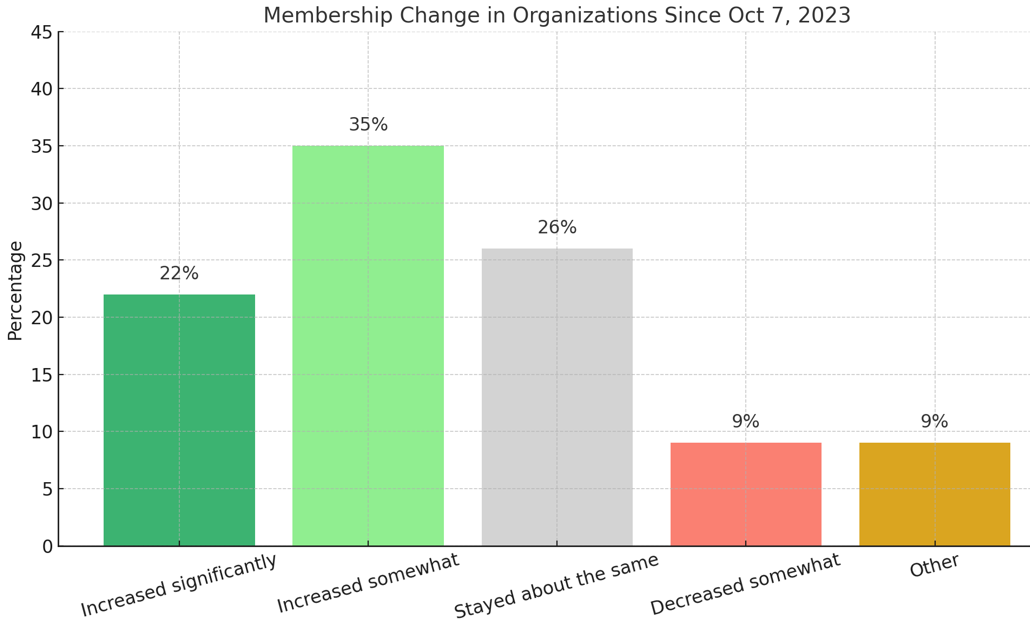
A majority of membership organizations in the San Diego Jewish community reported growth in membership post-October 7. This suggests that in times of crisis or heightened concern, many individuals may be seeking community, belonging, and connection through formal affiliation. The data indicates a meaningful shift toward engagement through institutional membership.
How has attendance/participation changed since Oct 7, 2023?
The data reflects a strong overall increase in attendance and participation among organizations following the events of October 7:
54% of respondents reported that participation increased somewhat.
An additional 18% noted a significant increase.
Combined, 72% of organizations experienced higher attendance and engagement.
Meanwhile, 10% reported that participation stayed about the same, and another 10% saw a slight decrease.
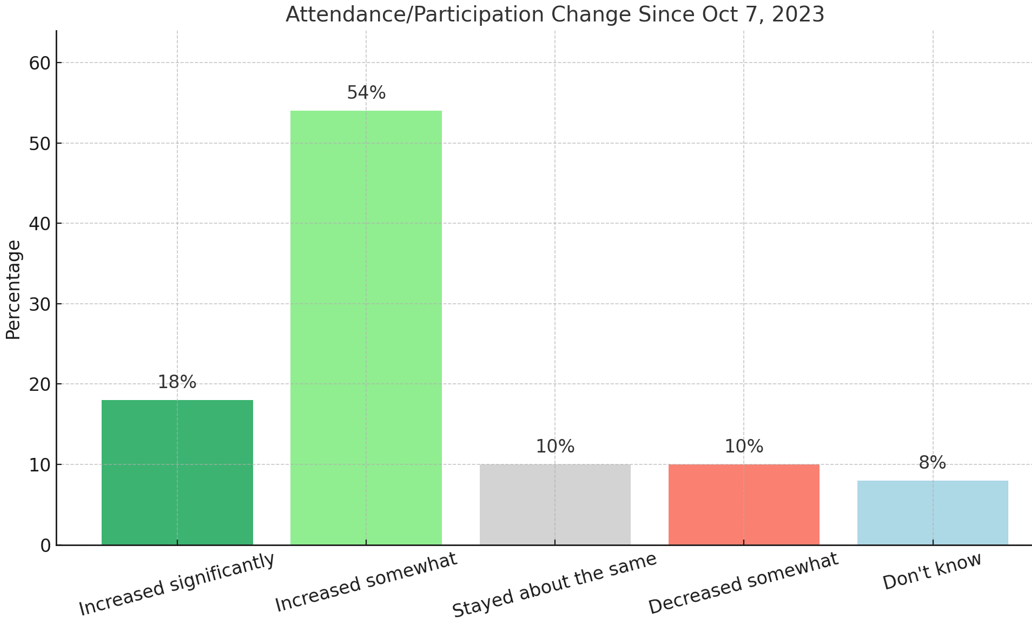
The majority of organizations have seen a clear rise in community participation post-October 7. This trend suggests a heightened desire for connection, support, and involvement, as individuals increasingly turn to Jewish institutions and programs during a time of crisis and solidarity.
If you are a school, how has enrollment changed since Oct 7, 2023?
Eighteen survey responders self-identified as a school. The data reflects a mixed picture of how enrollment in Jewish schools has changed in the aftermath of October 7:
28% of respondents indicated that enrollment increased somewhat.
17% reported that enrollment either stayed about the same, decreased somewhat, or selected “other”.
22% of respondents selected “don’t know”, suggesting either uncertainty or lack of available data at the time.
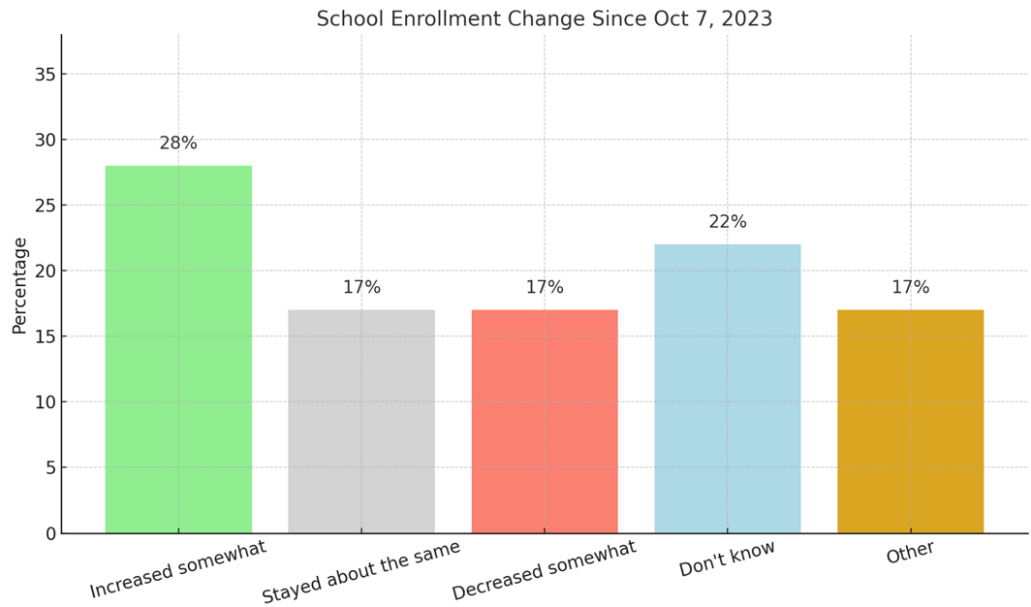
While over a quarter of schools noted a moderate increase in enrollment, the data overall shows no strong consensus. A notable percentage (22%) of schools were unsure of enrollment trends, and responses were relatively evenly distributed across the remaining categories. This may point to a period of transition or instability in school enrollment patterns as families respond to changing needs, security concerns, or community dynamics post-October 7.
What barriers to engagement have emerged or intensified for your constituents? What keeps people from coming?
The graph highlights the most commonly cited barriers to engagement within the Jewish community. The top concerns include:
Safety and Security (41%) – the most significant barrier, reflecting current geopolitical or community-related anxieties.
Cost (36%) – affordability is a major obstacle, suggesting that financial strain may deter individuals or families from participating.
Lack of social connections (21%) – not knowing many people is a notable deterrent, pointing to a need for better welcoming and integration efforts.
Inconvenient location (18%) – proximity and access remain logistical challenges.
Political discomfort (15%) – some feel their political views are unwelcome, signaling a need for more inclusive spaces.
Jewish knowledge confidence (13%) – a lack of confidence in Jewish learning may prevent people from participating.
Lack of interesting activities (10%) – some simply haven’t found offerings that resonate with them.
Feeling unwelcome (5%) – while the least cited, this still highlights the importance of creating welcoming environments.
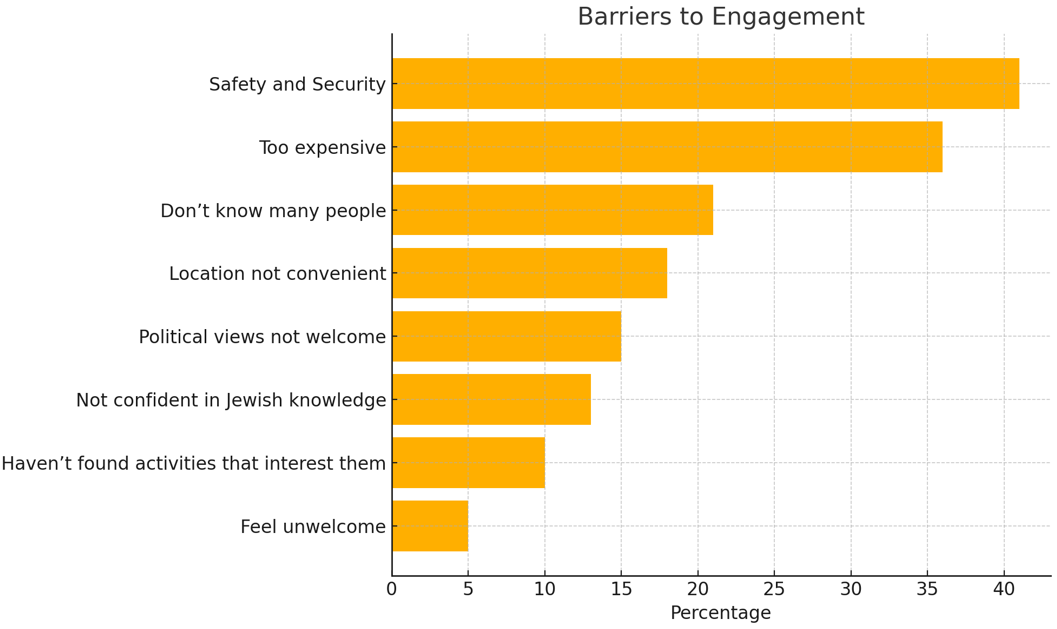
The findings suggest that while security and cost are the most prominent barriers, there is also a clear need to foster inclusive, accessible, and socially engaging environments. Reducing financial, logistical, and cultural entry points could significantly increase community participation.
If you responded “other” above, please explain:
The following themes emerged from respondents who selected "Other" as a barrier:
Urban migration and remote work post-COVID have impacted foot traffic and participation.
Some organizations lack security infrastructure, causing concern.
Specific incidents and lack of funding for protection were noted.
Families feel physically and emotionally insecure.
Hesitancy to express political views was noted.
Overwhelmed schedules (school, sports, life) limit engagement.
A few respondents explicitly stated they did not perceive any barriers to engagement.
These comments reflect a mix of logistical, emotional, security-related, and perception-based challenges, as well as isolated organizational realities.
Specific notable comments that reflect the themes include:
"Feeling physically secure is something that continues to emerge among our families. People also hesitate expressing their political viewpoints for fear they will be unwelcome."
"Sometimes they are already overwhelmed with activities (from school, sports, social life) and don't find the time, interest or energy to come."
Section 2: Connection and Community
This section examines the evolving dynamics of communal connection in the wake of October 7. Many organizations reported increased fundraising, volunteerism, and a stronger sense of unity and collaboration across the Jewish communal landscape. While partnerships among Jewish organizations have grown, engagement with non-Jewish institutions has remained mostly stable. Together, these findings reflect a community leaning into shared purpose, solidarity, and renewed investment in collective resilience.
How has fundraising changed since Oct 7?
The data reveals that most organizations experienced an increase in fundraising following October 7:
36% reported a moderate increase,
21% saw a significant increase,
Together, a majority of 57% indicated improved fundraising outcomes.
Meanwhile, 31% stated fundraising has stayed about the same, suggesting stability in their donor base despite turbulent times.
Only 13% of respondents experienced a decline (10% somewhat, 3% significantly), indicating that decreases were relatively limited.
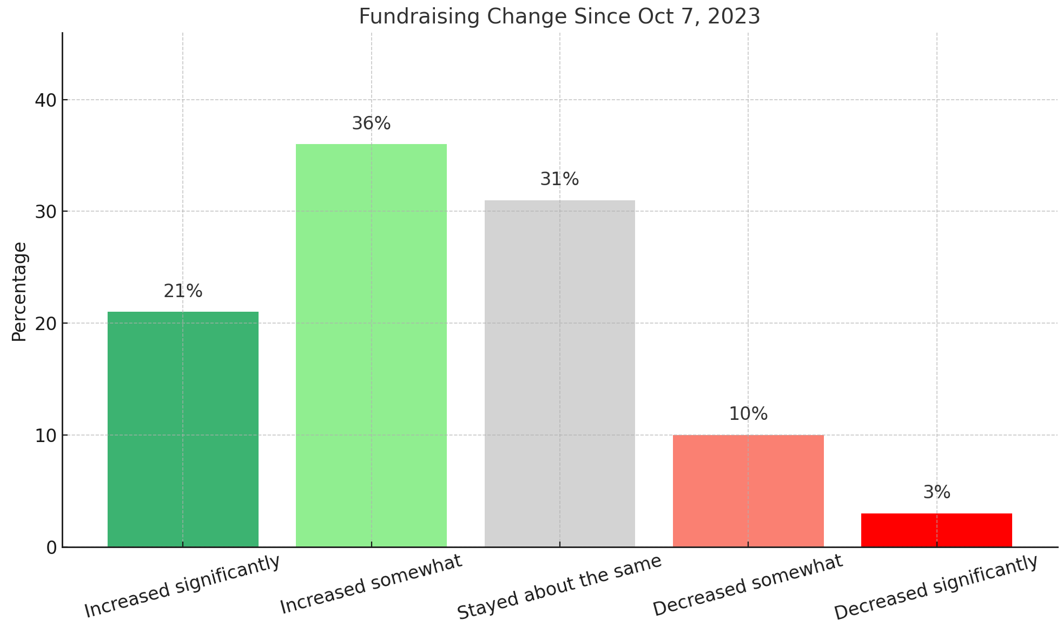
The overall fundraising climate appears strong, with a majority of organizations benefiting from increased support, possibly reflecting heightened community solidarity and engagement with Israel-related causes during and after the crisis.
How has volunteerism changed since Oct 7?
Volunteerism in the Jewish community—already recognized as relatively strong—has shown a notable upward trend since October 7 with 52% of organizations noting an increase. Specifically::
49% of organizations report that volunteerism has increased somewhat,
An additional 3% say it has increased significantly,
46% indicate it has remained about the same, and
Only 3% observed a slight decline.
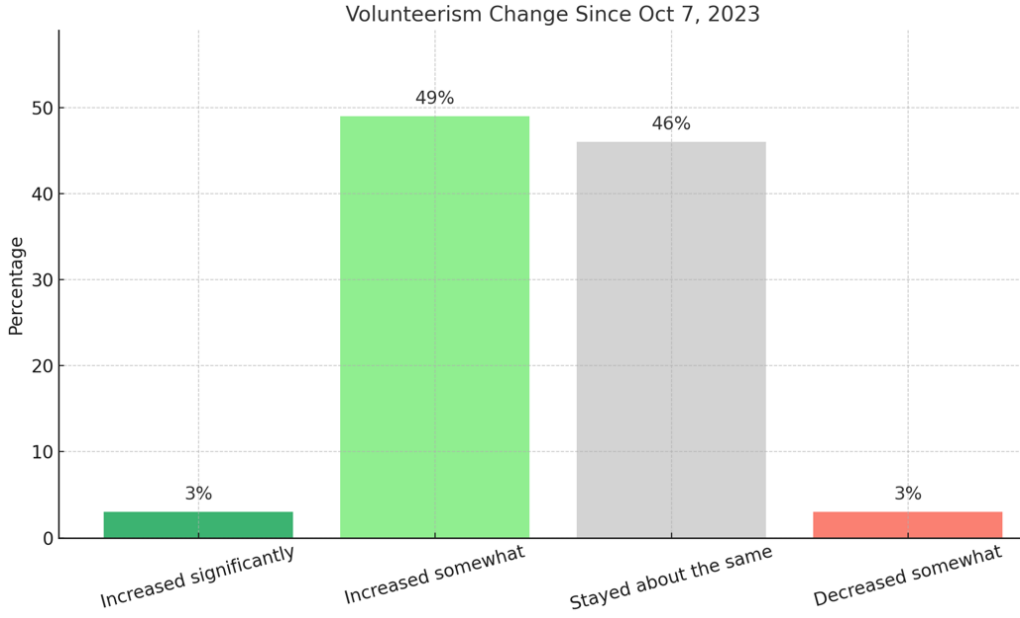
These results suggest that while baseline engagement was already high, recent events have catalyzed even greater participation, with more than half of organizations seeing growth in volunteer involvement. This reflects a strengthened communal response and an increased willingness to support collective needs during a time of crisis.
How has your organization’s sense of community changed since Oct 7?
The majority of organizations reported a strengthening sense of community following October 7, with many highlighting:
Increased engagement and solidarity, especially in response to rising antisemitism and the war in Israel.
"The post October 7th sense of community has coincided with the post-pandemic sense of community... When October 7th hit, the initial reaction was one of shock, but this has been replaced with a determination to stay strong and proudly Jewish."
A greater desire to connect, with people seeking comfort, belonging, and pride in Jewish identity.
“People want to be with other Jewish people more so than ever before.”
More collaboration among organizations, donors, and community leaders, often driven by shared values and mutual support.
"We have felt a responsibility to step up... This has resulted in more frequent and deeper communication with our Jewish partners, and more collaboration driven by the professional staff and donors."
Youth, adults, and families showing renewed interest in communal and cultural Jewish life, particularly through educational and spiritual programming.
"Also, families felt the need to reinforce the identity and belonging of their kids, with some of the families that were not as involved resulting in signing up their kids for extra activities."
Some organizations noted a deepening of ties with Israel, especially through partnerships (e.g., with Sha’ar HaNegev), events, and delegations.
"Transformed. We have found ourselves at the heart of Jewish San Diego... Our connection with Sha'ar HaNegev has deepened considerably... working in collaboration with many more organizations and agencies in more meaningful partnerships."
A few respondents reported mixed or neutral changes, citing political complexities, community fatigue, or challenges unrelated to October 7.
"Very mixed. Started out with a strong sense of Israeli pride but as the war in Gaza continued, we saw both sides to either eliminate Palestinians or get out of the war."
Others emphasized an ongoing need for local support, noting that while donations to Israel increased, local service efforts sometimes felt overlooked.
Overall, the data reveal that October 7 served as a catalyst for reconnection, prompting many Jewish organizations and individuals to reaffirm and deepen their communal bonds.
Since Oct 7, are you collaborating more or less with other Jewish organizations?
The data reflects a clear trend toward increased collaboration among Jewish organizations following the events of October 7:
44% of respondents reported collaborating somewhat more with other Jewish organizations.
18% noted they are collaborating significantly more.
36% said collaboration has stayed about the same, and
Only 3% reported somewhat less collaboration.
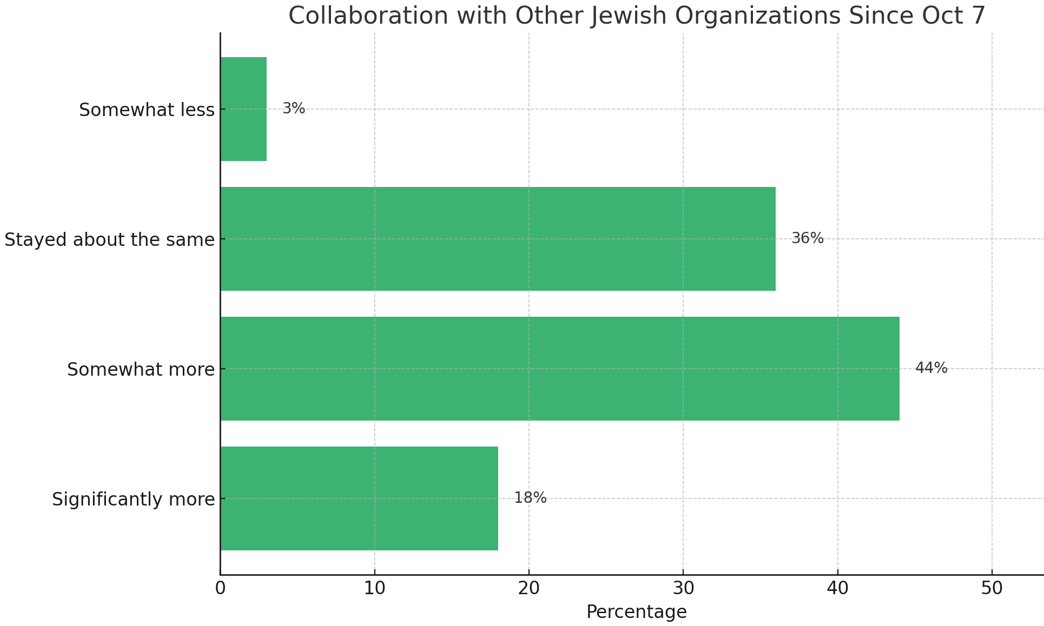
The data suggests a notable shift toward partnership and solidarity within the Jewish community, likely driven by shared concerns and the need for coordinated responses in a rapidly changing environment.
Please explain why you are collaborating either more or less with other Jewish organizations. (What motivated the collaboration, or contributed to the lack of collaboration).
The data reveals that increased collaboration among Jewish organizations has largely been driven by a heightened sense of urgency, unity, and shared purpose following the October 7 attacks. The dominant themes include:
Motivations for Increased Collaboration
Shared Crisis Response: Many organizations felt a collective responsibility to respond to the crisis in Israel and its local reverberations, prompting joint initiatives, events, and communications.
“Since October 7, I believe all organizations have realized that we must work together—not only to show unity to our community but also to stand together in support of Israel and our community.”
Strength in Unity: There is a widespread belief that the community is “stronger together,” with collaboration amplifying impact and resource efficiency.
“Unity is not merely a response to adversity—it is a reaffirmation of our shared history, values, and purpose.”
Community Needs: Organizations are coordinating more to support overlapping populations and to expand services, especially in the realms of mental health, security, advocacy, and youth engagement.
“To benefit from different strengths, to respond to overlapping needs, to create a more efficient use of resources, to build community.”
Leadership Shifts: Some noted that new leadership within organizations has energized outreach efforts and helped build stronger inter-organizational relationships.
“I think the other executives of Jewish Organizations have been very open to collaboration so we have taken every opportunity to collaborate.”
Support Infrastructure: Institutions like Federation, JCC, and JFS were cited as both collaborators and potential sources of support, though some respondents voiced a desire for more equitable partnership or funding support.
“Shared financial responsibilities. Stronger desire for Jewish community and partnership.”
Barriers to or Limitations on Collaboration
Mission Conflicts: Political or ideological differences (e.g., policy advocacy vs. non-political missions) sometimes limit formal collaboration despite informal communication.
Resource Constraints or Priorities: Some organizations expressed that collaboration is not a current priority, or that they remain independent due to tradition, operational structure, or focus.
Operational Challenges: A few noted friction with logistics or partner organizations, such as facility usage or overlapping commitments.
Overall Insight
While a few organizations reported unchanged or limited collaboration, the majority described a notable increase in connection, shared programming, and unity, underscoring a community-wide recognition of the need for collective strength, especially in times of crisis.
Since Oct 7, are you collaborating more of less with non-Jewish organizations?
The data reflects limited change in the level of collaboration Jewish organizations have with non-Jewish organizations following October 7:
74% of respondents indicated that collaboration levels have stayed about the same.
21% reported that they are collaborating somewhat more with non-Jewish organizations.
3% indicated they are collaborating somewhat less, and another 3% reported significantly less collaboration.
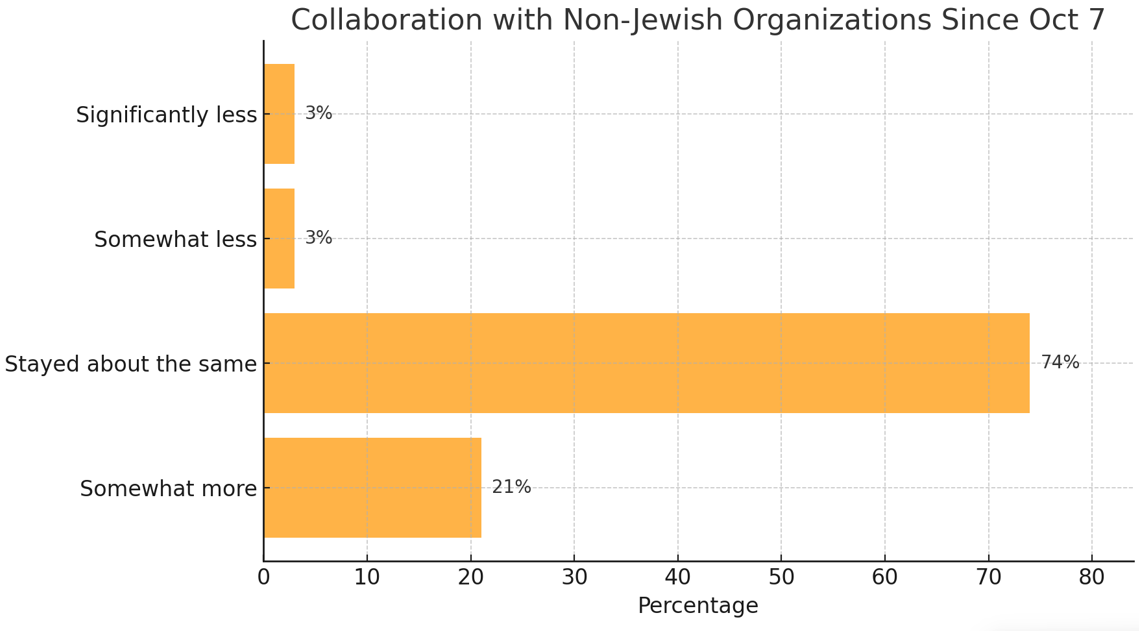
While a small portion of organizations (21%) have increased their collaboration with non-Jewish groups, the vast majority reported no change (although it is not know what “no change” signifies – that they maintained the previous collaborations with non-Jewish organizations or if they continue to not have any collaborations with non-Jewish organizations). This suggests that existing relationships (or non-relationships) with non-Jewish partners have remained steady, with only minor shifts in either direction. The stability may reflect either a continued focus on internal community needs or satisfaction with the current level of cross-community engagement.
Please explain why you are collaborating either more of less with non-Jewish organizations (what motivated the collaboration, or contributed to the lack of collaboration).
Responses from organizations reveal a largely unchanged landscape of collaboration with non-Jewish groups. Most organizations reported maintaining existing levels of engagement, often due to longstanding patterns or a lack of new opportunities or resources. However, a few noted specific reasons for shifts:
Limited Change or No Collaboration: Many organizations indicated there had been no significant change in collaboration, with some rarely engaging non-Jewish groups to begin with. Several noted logistical or situational barriers, such as lack of invitations, opportunities, or perceived benefit.
“We haven’t had the opportunity to work in continuous and meaningful collaboration with a non-Jewish organization. We understand the importance of this, but we haven’t placed much emphasis on it.”
Increased Collaboration: A few organizations reported more collaboration, driven by interfaith support post-October 7, proactive outreach from churches, and efforts to increase awareness around antisemitism. Some of this growth was attributed to new leadership or expanded community engagement initiatives.
“Many of the local churches have reached out to [us] and we try to work with them as much as possible. We have also tried to work with our neighbors on awareness when possible.”
Decreased or Challenged Collaboration: A small number of responses reflected strained relationships, often tied to political tensions or controversial public statements. Some organizations expressed a desire to collaborate more but had not yet found the means or opportunities.
“We are trying to find space for [our] services, and not all churches will cooperate. As if we are responsible for actions of Bibi.”
Overall, collaboration with non-Jewish organizations has mostly remained stable, with isolated instances of growth or decline. Barriers such as political sensitivities, limited outreach, and internal capacity constraints appear to limit deeper engagement. Where collaboration has increased, it is often rooted in mutual support and a shared response to rising antisemitism or community solidarity efforts.
Section 3: Safety and Wellbeing
Heightened concerns around safety and mental health have emerged as critical themes since October 7. This section details the sharp increase in perceived security needs, organizational investment in protective infrastructure, and the emotional toll felt across the community. While physical security has become a financial and operational priority, organizations are also grappling with growing mental health needs and staff wellness—signaling a broader shift toward holistic communal care.
How have the security needs of your organization changed since Oct 7?
The data highlights a clear and substantial shift in the perceived security needs of Jewish organizations following the events of October 7:
62% of respondents reported that their security needs have increased significantly.
26% indicated their security needs have increased somewhat.
13% noted that their needs have stayed about the same.
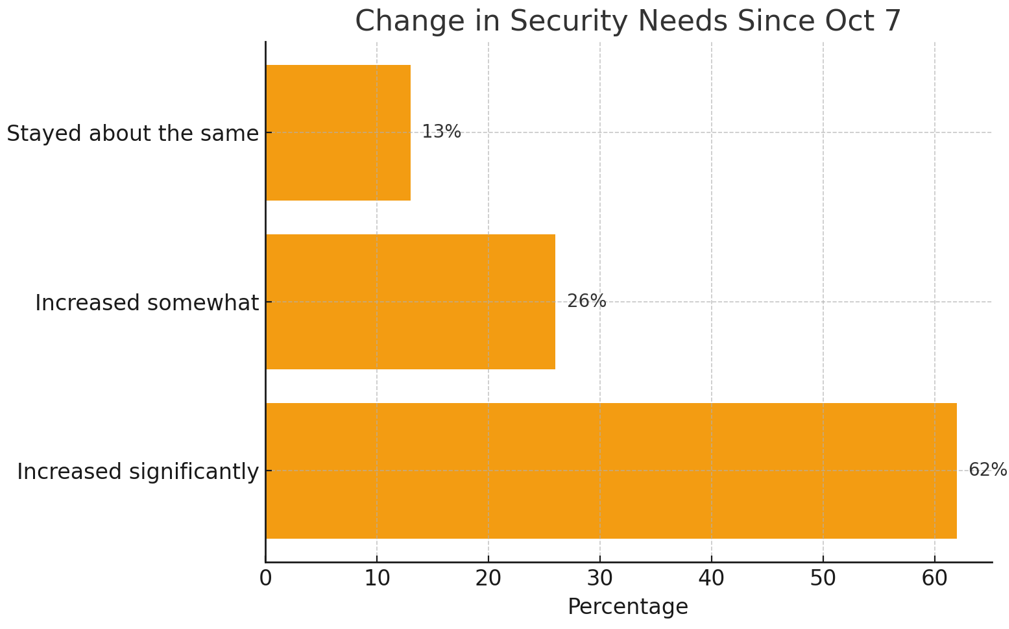
A vast majority (88%) of Jewish organizations report heightened security needs since October 7, with nearly two-thirds citing a significant increase. This trend reflects a growing sense of vulnerability and urgency within the community, underscoring the critical importance of safety planning, resource allocation, and support for physical and psychological security.
To what extent is safety and security currently a barrier to engagement at your organization?
The data reveals that concerns around safety and security continue to influence engagement in Jewish organizations, though their severity varies across respondents. For some, it remains a pressing issue; for others, less so—suggesting that organizations are experiencing a broad range of realities depending on location, security infrastructure, and community sentiment.
8% of respondents identified safety and security as a significant barrier to engagement.
28% saw it as a moderate barrier.
23% described their view as neutral.
26% considered it a minimal barrier.
13% reported it as not at all a barrier.
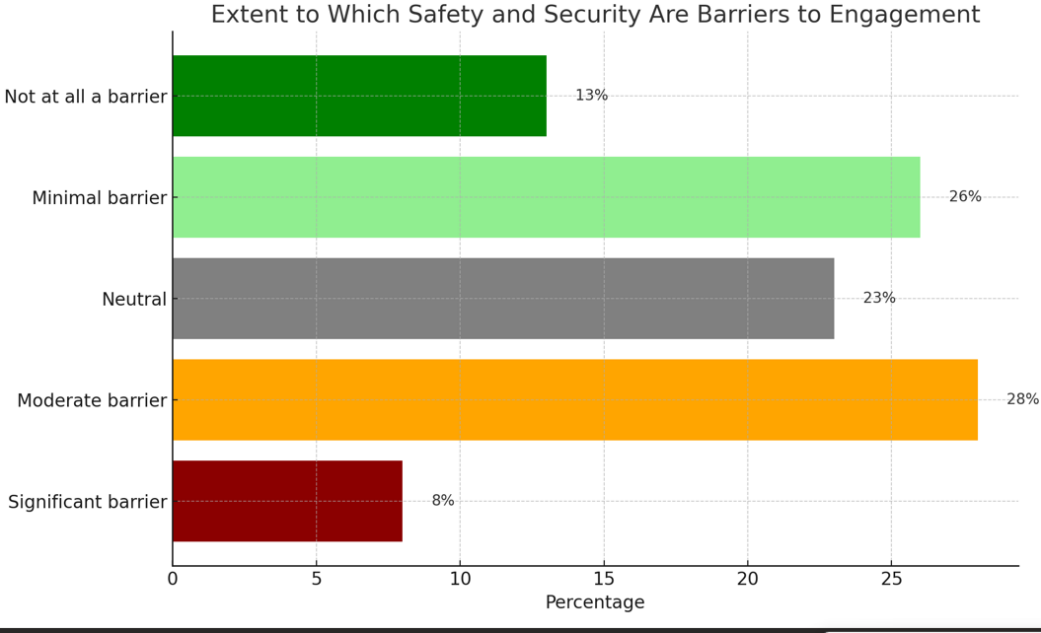
Although only a small fraction consider security to be a significant obstacle, over one-third (36%) still see it as a moderate to serious barrier. This reflects ongoing concerns in some communities, especially in the wake of heightened antisemitism and geopolitical events. Conversely, nearly 40% reported minimal to no concern, which may reflect either improved security measures or differing threat perceptions. This variance highlights the importance of tailoring security responses and outreach strategies to the specific contexts in which organizations operate.
What percentage of your overall annual operating budget is spent on safety and security?
The data reveals that while safety and security are clearly important to most Jewish organizations, the majority allocate a relatively small portion of their annual budgets to these needs:
59% of organizations spend less than 10% of their overall annual budgets on safety and security.
28% allocate between 10–19%, indicating a moderate level of investment.
A small number of organizations (3–8%) dedicate 20–49%, reflecting heightened or possibly urgent security needs.
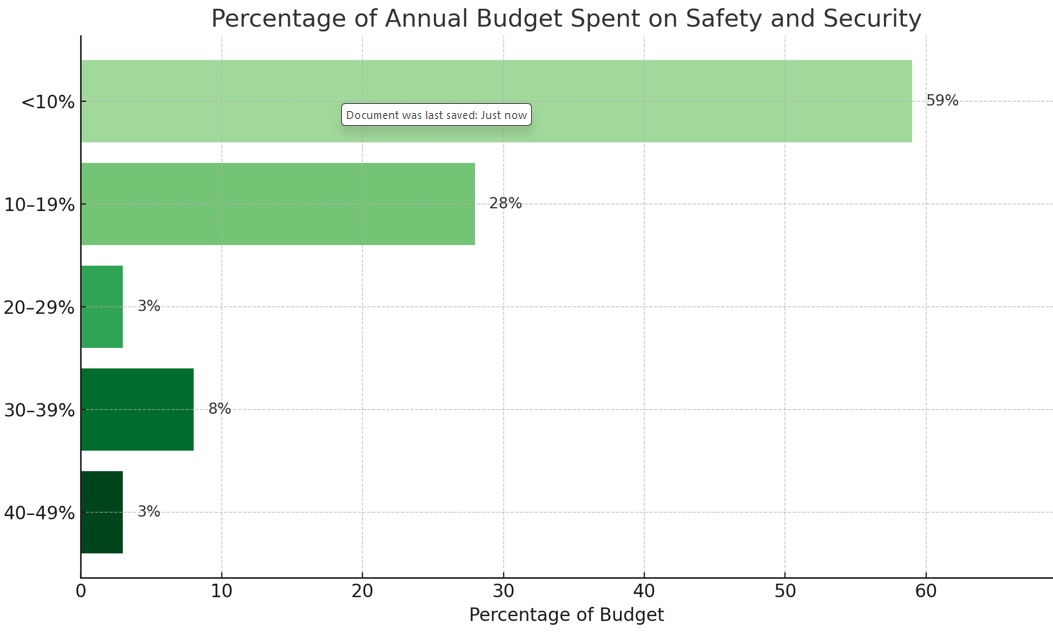
Although nearly all organizations report increased security needs since October 7, most are still spending a modest share of their budgets on it—possibly constrained by overall resources or competing priorities. Only a minority are directing a large portion (over 20%) toward safety and security, suggesting that significant increases in need may not yet be fully matched by financial capacity or strategic budgeting.
How has the percentage of your budget spent on safety and security changed in the past two years?
The data shows that a majority of Jewish organizations have increased the percentage of their budget allocated to safety and security since October 7, 2023:
36% reported a significant increase.
38% reported a somewhat increase.
26% stated that their spending stayed the same.
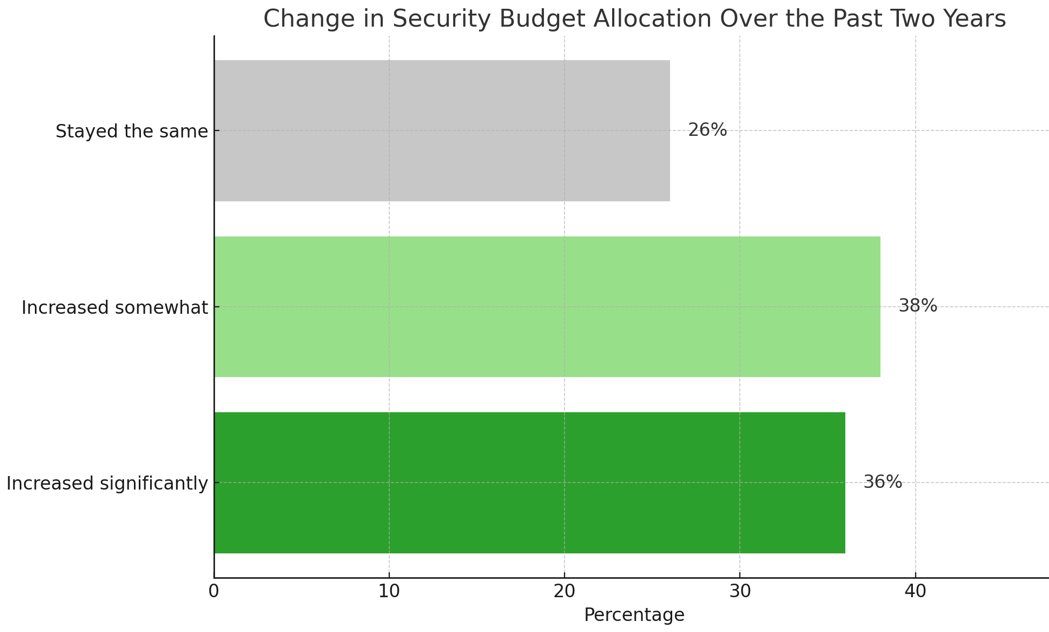
A combined 74% of organizations have increased their investment in security over the past two years, with more than a third noting a significant rise. This trend reflects growing concerns around safety amid rising antisemitism and global instability. The strong shift toward greater security expenditure highlights how safeguarding community members has become a more urgent and prioritized part of organizational operations.
Approximately how much did your organization spend on security in the past year?
Although only 39 organizations responded to the survey, collectively, they reported spending over $7,000,000 on security-related expenses. The cumulative total reveals a substantial investment in safety and protection. This underscores the intense pressure many organizations feel to ensure secure environments for their communities. The scale of spending reflects the increased threat landscape post-October 7 and the high financial burden that security now represents for Jewish institutions.
What have you noticed about the level of stress or mental health concerns among your members since Oct 7?
The data shows that a substantial rise in stress and mental health concerns has become a widespread reality across Jewish organizations following the events of October 7. This trend cuts across nearly all reporting organizations and highlights the depth of emotional and psychological impact experienced by community members.
59% of respondents indicated that mental health concerns have increased somewhat.
31% reported a significant increase.
Only 10% said these concerns have stayed the same.
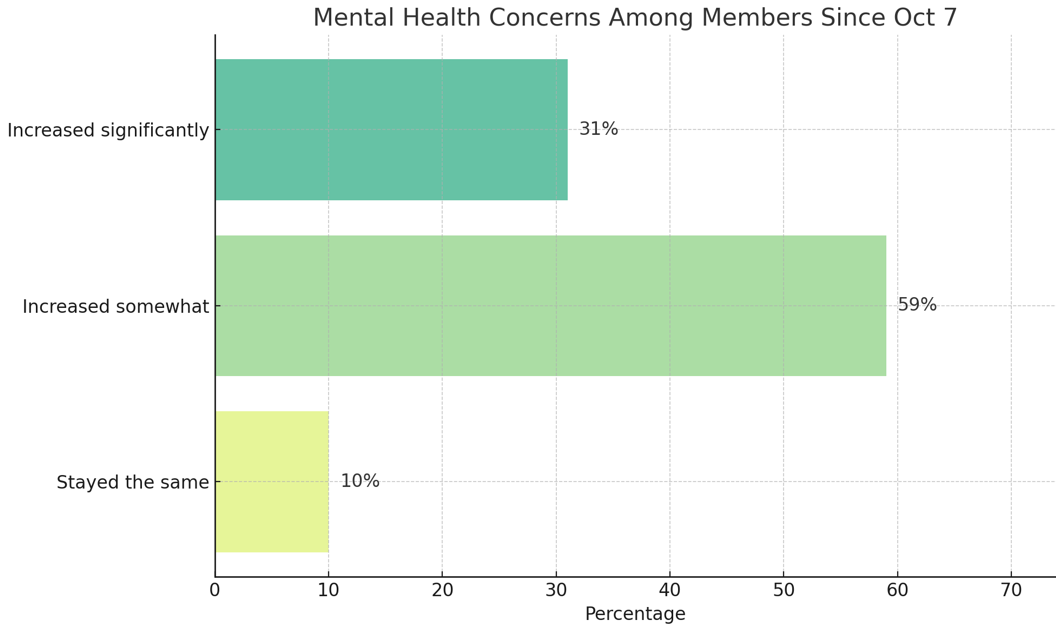
These findings suggest an urgent and persistent need for enhanced mental health infrastructure and support within Jewish communal settings. The overwhelming majority (90%) of organizations have observed worsening emotional well-being among their constituents. This signals not only a crisis response need, but also an opportunity for long-term investment in trauma-informed programming, culturally competent counseling, and preventative mental health services. The data reinforces that community care must now extend beyond physical safety to include emotional resilience and psychological healing.
Since Oct 7, staff turnover has….
The data on staff turnover reveals a notable pattern of stability across Jewish organizations despite the turmoil and pressures following October 7. A large majority of respondents (69%) indicated that staff turnover has stayed the same, suggesting organizational resilience and workforce consistency even during a period of increased operational demands and community strain.
69% reported that turnover has stayed the same.
18% experienced a somewhat increase in turnover.
8% indicated turnover has decreased somewhat.
Only 5% reported a significant increase.
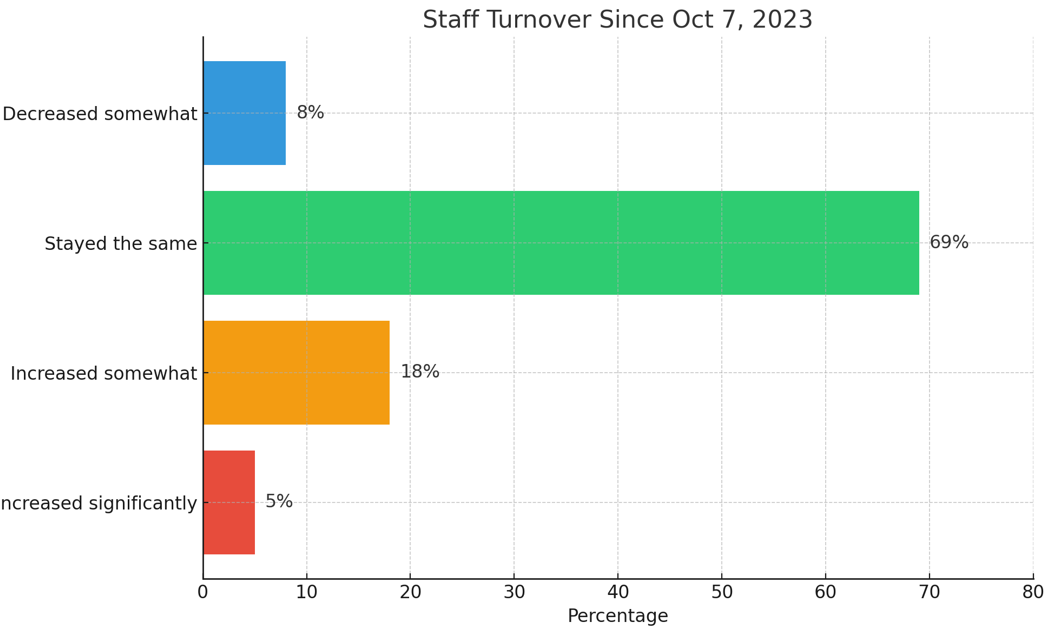
While many sectors have struggled with workforce retention in times of crisis, the Jewish communal sector appears to have largely retained its staffing levels. This stability may reflect strong organizational culture, mission-driven commitment among staff, or effective leadership practices. However, the modest increase in turnover for some organizations may also signal emerging stressors or burnout that should be monitored and proactively addressed to sustain long-term staffing health.
Section 4: Antisemitism and its Impact
Amid rising antisemitism globally and locally, nearly all organizations reported increased concern among their constituents, with many directly affected by incidents ranging from threats to vandalism. This section explores the tangible impacts on programming, visibility, and participation, as well as the wide-ranging partnerships and preparedness efforts that Jewish organizations are relying on to protect and support their communities. It underscores the urgency of coordinated response and the deepening link between safety, identity, and engagement.
Concerns about antisemitism among my organization’s members have…
The data reflects a striking and near-universal rise in concern about antisemitism among members of Jewish organizations following October 7. A total of 98% of respondents reported an increase in concern:
54% indicated that concerns about antisemitism have increased significantly.
44% reported that concerns have increased somewhat.
Only 3% stated that concern levels have stayed the same.
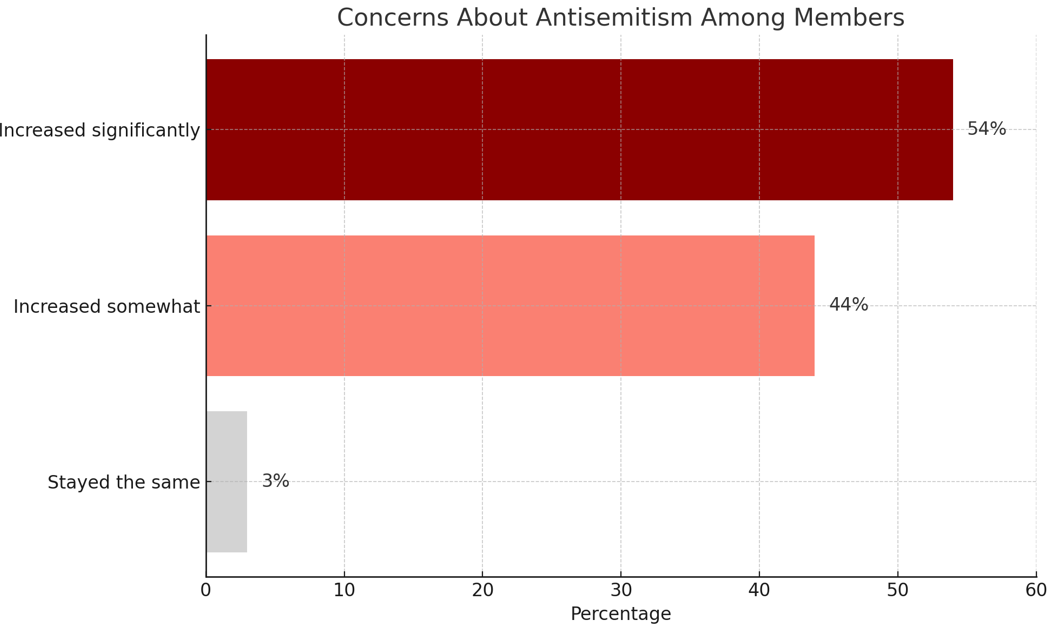
This data strongly suggests that the events of October 7 and their aftermath have triggered widespread and heightened sensitivity to antisemitism across the Jewish community. The near-total shift toward greater concern highlights the urgent need for communal support, security infrastructure, education, and advocacy. Organizations should consider this a critical factor in planning programs and allocating resources, as antisemitism is not only perceived as more prevalent—it has become a central concern shaping Jewish communal life.
Have you or your organization been directly affected by antisemitic incidents?
The data reveals a concerning reality: nearly half of Jewish organizations surveyed report having been directly affected by antisemitic incidents since October 7, 2023—a period marked by a global surge in antisemitic rhetoric and activity.
41% of respondents indicated that they or their organizations have been directly affected by antisemitic incidents.
46% reported not having been directly affected.
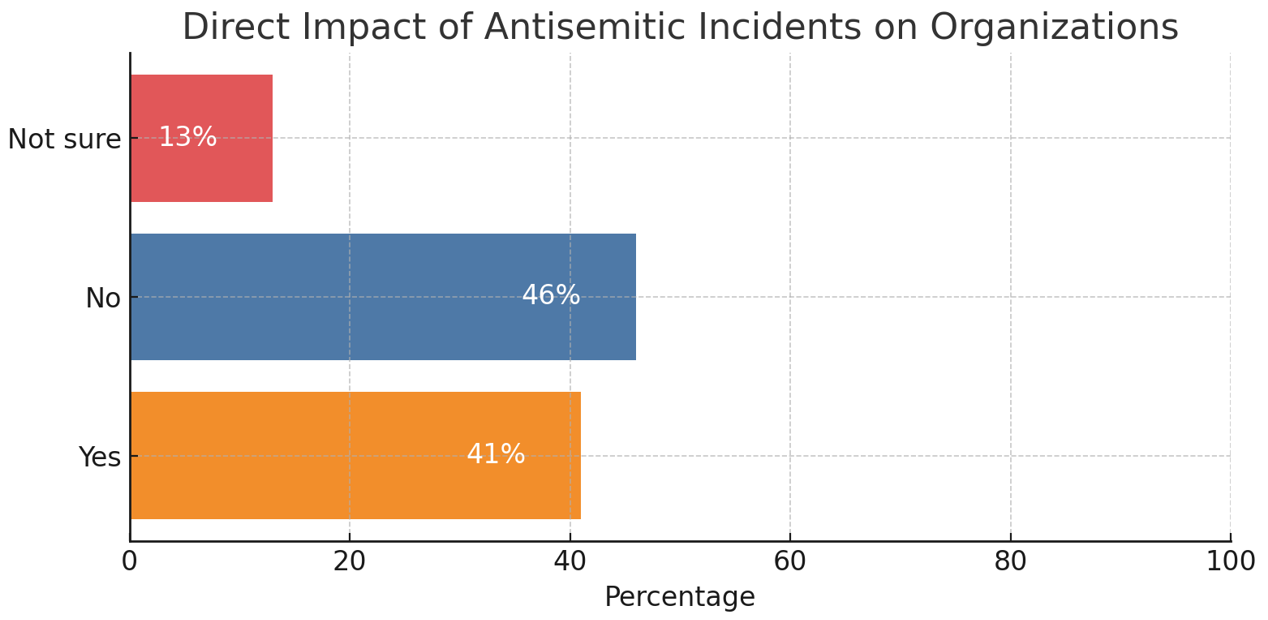 13% were not sure, indicating potential underreporting or a lack of clarity about what constitutes a direct incident.
While the largest share (46%) have not reported a direct incident, the fact that over four in ten organizations have experienced antisemitic impacts firsthand is deeply significant. Combined with the 13% uncertainty, more than half of all respondents may be dealing with either confirmed or suspected incidents. This underscores a heightened need for vigilance, reporting clarity, and comprehensive community support systems to address both actual incidents and the fear or uncertainty they produce.
If you or your organization have been directly affected by antisemitism, please describe how:
The qualitative responses reveal that antisemitism is impacting Jewish organizations and individuals on multiple levels—ranging from verbal harassment to threats of violence. While the severity and form of antisemitism vary, the responses reflect a clear climate of heightened fear, vigilance, and insecurity.
Key Themes:
Physical Threats and Security Incidents:
Several organizations reported direct threats, including bomb threats, suspicious individuals entering premises under false pretenses, and in one case, a foiled plot to attack an office. These threats have necessitated increased security measures such as armed guards and police reports."We had two incidents in two weeks this month of suspicious visitors with fake profiles coming into our office... police reports were filed."
Harassment and Vandalism:
Incidents included graffiti vandalism, threatening emails, harassing phone calls, and in-person confrontations, such as being screamed at or honked at on the street. One synagogue reported being vandalized four times in the past year."Harassing phone calls (fairly regularly). Honked or screamed at when walking (very occasionally). Unstable people giving undo attention and occasionally coming to our front gate."
Digital Antisemitism:
Respondents noted hostile content on social media platforms, including threatening Facebook and Instagram posts, especially in response to organizational announcements or events."Facebook posts are awful and threatening, responses to e-mails."
Protests and Demonstrations:
Some organizations, particularly those with a public presence or national visibility, experienced anti-Israel protests outside their events or in their neighborhoods, with antisemitic messaging sometimes present."Demonstrations happen in the neighborhood with signs posted derogatory to the war. People have been cursed or screamt at walking on the streets."
Campus-Based Antisemitism:
College-affiliated respondents highlighted frequent antisemitic incidents on campuses, describing them as “epicenters” of hostility, with students being followed, harassed, and requiring security involvement."College campuses are the epicenter so many of our students have experienced it and we deal with incidents daily."
Psychological and Social Impact:
Some noted a subtle shift in behavior, with people feeling the need to think twice before expressing Jewish identity. Others cited rising stress and concerns linked to U.S. policy or the broader geopolitical climate."Hard to define. People appear to have to think twice."
While the scale and nature of incidents differ, the responses convey a significant rise in both the perception and experience of antisemitism since October 7. Organizations are not only reacting to isolated events but are also adjusting structurally—through increased security and greater caution—reflecting a broader shift toward defensive postures in Jewish communal life. The responses suggest that antisemitism is being felt on physical, emotional, and institutional levels.
How has antisemitism impacted organizational programming and participation?
Responses reflect a complex and multifaceted impact of antisemitism on Jewish organizations' programming and participation since October 7. While some organizations have not reported noticeable changes, the majority describe adjustments to programming, heightened security, changes in public visibility, and evolving participation trends—both in terms of safety concerns and growing communal solidarity.
Key Trends:
Increased Security Measures:
The most commonly cited change is the significant expansion of security—including the need for armed guards, discreet event locations, limited public promotion, and new policies for gatherings. Some organizations have added security staff or increased budget allocations specifically for safety."We have created a whole new element of our mission devoted to antisemitism and security. Spending a fortune on it, hired staff exclusively devoted to it."
Shift in Visibility and Identification:
Several respondents reported opting for lower-profile public identities, especially when youth or families are involved. This includes removing Jewish identifiers from public-facing materials (e.g., shirts or banners) and limiting off-campus programming."We try and do more of our programming in an indoor environment. We are often times more discrete about stating the location of our various events."
Psychological Impact and Caution:
Some families were initially hesitant to attend Jewish events due to fear of antisemitic incidents. Although confidence improved with enhanced security, organizers report continued anxiety among members, especially around public events. This has led to internal reflection about messaging and visibility."At first I feel that many families didn't come because they were scared to be on a Jewish space, then they started seeing security increases and they feel more secure."
Growth in Educational and Advocacy Programming:
In response to the rise in antisemitism, many organizations have added or expanded educational initiatives. This includes community training, youth empowerment programs, partnerships with the ADL, and national campaigns like “Shine a Light Shabbat.”"We have been overt in support of Israel and developing programming to combat and prevent antisemitism.”
Changes in Participation Patterns:
While some organizations noted decreased attendance due to safety concerns, others reported increased engagement, as members sought out Jewish spaces for comfort, solidarity, and identity reinforcement. Adult education programs and mental health events saw notable upticks."I think people want to be in Jewish spaces because they feel less comfortable in non-Jewish spaces."
Strategic Programming Shifts:
Organizations are being more intentional with their content, choosing to lean into Jewish pride, or conversely, to avoid polarizing discussions, depending on their audience and mission. Several respondents noted internal disagreements or challenges around how to frame discussions about Israel and antisemitism."We try and avoid direct discussions and keep to the traditional and spiritual.”
Antisemitism has reshaped the way many Jewish organizations operate—especially in terms of security, public presentation, and communal tone. The data illustrates a dual response: increased vigilance and discretion on one hand, and deepened engagement and Jewish pride on the other. The resilience shown through new initiatives, growing participation, and adaptive programming points to a community that is navigating threat with both caution and strength.
What resources or organizations do you reach out to for assistance with addressing issues related to antisemitism?
Jewish organizations across San Diego report a diverse yet overlapping set of trusted partners and resources when addressing antisemitism, with a strong emphasis on coordination with Jewish communal institutions and law enforcement.
Most Frequently Mentioned Resources:
ADL (Anti-Defamation League):
The most commonly cited resource, recognized for its expertise in antisemitism education, community response, and incident reporting.AJC (American Jewish Committee):
Frequently engaged, particularly for advocacy and Israel-related antisemitism.Jewish Federation of San Diego:
Widely regarded as a key local coordinating hub for resources, training, funding, and convening partnerships—although at least one respondent noted they had not received a response to their grant request.Local & Federal Law Enforcement:
Organizations routinely collaborate with SDPD, FBI, Carlsbad Police, Encinitas Sheriff’s Department, and Homeland Security for response, protection, and investigation.Secure Community Network (SCN):
Heavily utilized for physical security support, threat training, and best-practice consultation. Several respondents noted SCN had trained their staff.
Additional Resources Cited:
Community Coalitions:
Many referenced the Finest City Community Coalition as a valued partner for collaboration, education, and networking.Security Consultants & Committees:
Several organizations maintain internal security teams or security chairs, or work with Federation’s SCN community security director.Religious & Educational Institutions:
Hillel, synagogues, Jewish schools, and even national partners like Brandeis University were mentioned for consultation or support.Other Jewish Organizations:
StandWithUs, Leichtag Foundation, Olami, and other local Jewish leaders contribute to the network of support.
The responses reflect a highly collaborative and interconnected approach to addressing antisemitism, relying on a mix of national expertise, local coordination, and law enforcement. While some respondents rely solely on internal structures, the majority actively leverage a robust ecosystem of Jewish and civic institutions. A few noted gaps or frustrations—particularly around funding or responsiveness—but overall, the community appears to be mobilizing with a strong sense of shared responsibility and mutual support.
How confident are you in your organization’s ability to respond to antisemitic threats or incidents?
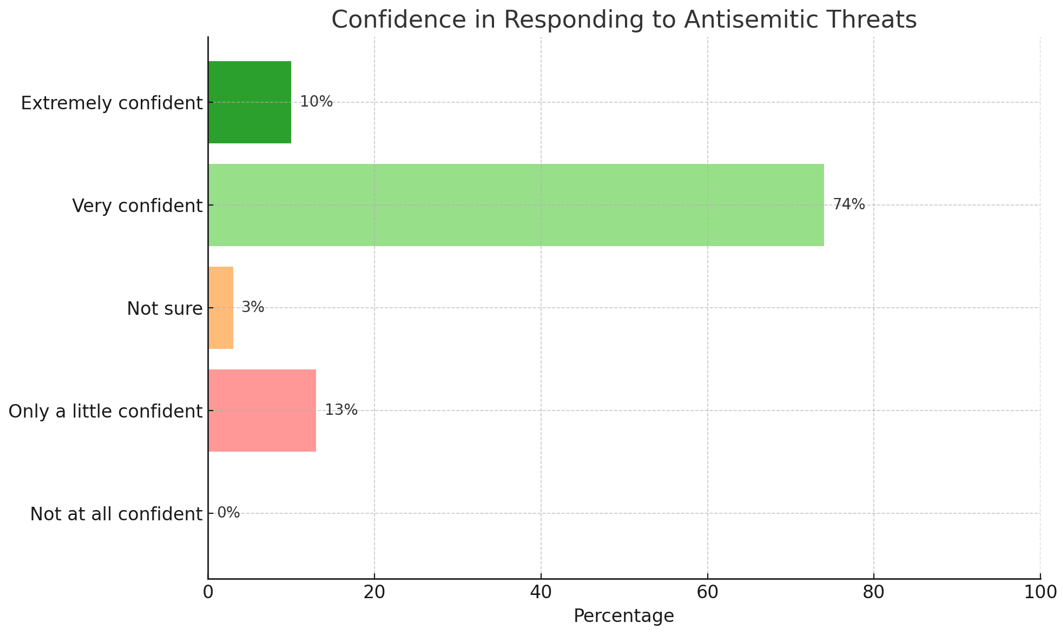
While the overall level of confidence is encouraging, with 84% expressing strong assurance in their preparedness, the presence of some uncertainty and moderate confidence levels indicates that continued support, training, and coordination—especially for the 13% with only limited confidence—may be beneficial. The complete absence of those feeling "not at all confident" is notable and reflects a commendable baseline of security readiness across the sector.
Please explain your response above:
Organizations that expressed confidence in their ability to respond to antisemitic threats consistently cited formal security infrastructure, professional partnerships, and ongoing training as key reasons for their preparedness. These responses revealed a wide range of efforts, from having armed guards, well-rehearsed protocols, and security committees to maintaining relationships with local law enforcement, Secure Community Network (SCN), the Jewish Federation, and the ADL.
Several organizations also noted regular staff and community trainings, emergency response plans, and drills as part of their readiness. Others emphasized their experience handling past incidents and the presence of internal or contracted security professionals. A few also referenced community-specific adaptations, such as reducing public visibility of programs or being discreet with event locations.
However, not all responses reflected full confidence. Some organizations acknowledged limited security infrastructure, lack of surveillance or trained staff, or dependence on external partners. A few noted that while they feel capable of responding to minor incidents (e.g., graffiti), they might be unprepared for more serious threats. Others expressed concern over uncertainty, location vulnerabilities, or insufficient resources.
The majority of organizations feel reasonably well-prepared, with strong systems, community ties, and trained personnel in place. However, responses also highlight the disparity in resources and readiness across organizations, with some lacking basic security measures. The comments suggest a continued need for funding, training, infrastructure support, and coordination to ensure that all Jewish organizations—regardless of size or structure—can confidently and effectively respond to antisemitic threats.
Section 5: Engagement Around Israel and the Conflict
The Israel–Gaza conflict has profoundly shaped organizational communications, programming, and community sentiment. This section explores how organizations have navigated messaging, internal diversity of opinion, emotional sensitivities, and programmatic shifts. While most constituents responded positively to outreach and educational efforts, organizations continue to balance clarity, inclusivity, and strategic advocacy in a politically and emotionally complex environment.
How has your organization communicated with constituents about the situation in Israel and Gaza?
Organizations used a wide variety of methods to communicate with their constituents about the situation in Israel and Gaza. Based on the responses:
Most Frequently Used Methods:
Email – 32 organizations
Email was the most common communication channel, showing it remains a primary tool for direct updates and outreach.Meetings and Gatherings – 26 organizations
Many organizations relied on in-person or virtual meetings to create space for dialogue, education, or emotional support.Social Media – 20 organizations
Platforms such as Facebook, Instagram, or X were frequently used to share information, updates, and solidarity messaging.Sermons – 15 organizations
Clergy used religious services and sermons to address the conflict, provide context, or offer spiritual guidance.Posters/Displays – 9 organizations
Physical or digital displays were used to raise awareness or express support within organizational or communal spaces.Texts – 7 organizations
Text messaging was used less frequently but still played a role in quick updates or mobilization.Phone Trees – 3 organizations
A small number of organizations used phone trees for personal outreach, especially to reach members less engaged digitally.
Most organizations employed multi-channel communication strategies, often combining email, social media, and in-person gatherings. The frequent use of sermons and religious forums also reflects the central role of spiritual leadership in helping constituents process and respond to the ongoing conflict. While more traditional and broad-reaching tools (like email) dominate, there’s evidence that some organizations are also using personalized or visual methods to connect more deeply with their communities.
How frequently do you communicate about the war in Gaza, hostages, and Israel?
Survey responses indicate that most organizations communicate about the war and related issues on a flexible, as-needed basis, rather than on a fixed schedule. Here’s a breakdown of how often they communicate:
Frequency Counts:
As Needed – 26 organizations
The vast majority of organizations communicate reactively, choosing to send updates when there is something new or significant to share.Weekly – 6 organizations
A smaller group provides regular weekly updates, indicating a structured communication plan.Daily – 3 organizations
Only a few organizations provide daily communication, likely reflecting their national role, scale, or focus on advocacy.Bi-weekly – 3 organizations
Some organizations provide updates every other week, often in combination with “as-needed” communications.Monthly – 3 organizations
Monthly communication was infrequently used and likely part of general newsletters or program updates.Never – 1 organization
One organization reported no communication about these topics.Infrequently – 1 organization
This suggests very limited engagement on the topic, possibly due to organizational focus or capacity.
The results reflect a predominantly responsive communication model, with many organizations opting to address issues as they arise rather than adhere to a set schedule. This flexible approach may allow organizations to remain sensitive to their constituents' bandwidth and emotional state. However, the relative lack of structured or frequent messaging may also point to resource constraints, caution in navigating politically sensitive topics, or a preference for in-person communication over digital outreach.
What challenges, if any, have you faced in discussing or programming around Israel, the hostages, or the conflict?
The responses reflect a wide range of experiences, with some organizations reporting no challenges at all, and others navigating complex political sensitivities, emotional tensions, and community divisions. The most frequently cited themes are:
No Challenges Reported
A significant number of organizations (approximately one-third) reported facing no difficulties in discussing or programming around the conflict, either due to alignment in their communities, clarity of mission, or avoiding the topic altogether.
Diverse and Divisive Opinions
Several organizations reported struggles with the diversity of opinions within their communities. These included:
Tensions between strongly pro-Israel and critical voices.
Navigating internal disagreements, especially regarding the Israeli government's actions and U.S. foreign policy.
Ensuring inclusive and respectful spaces where differing views can be heard without alienating members.
Program Fatigue and Emotional Sensitivity
Some respondents noted:
Emotional fatigue and trauma sensitivity, especially around youth programming.
The challenge of not overwhelming constituents while keeping them informed.
Balancing truthful discussion of difficult topics with age-appropriate content and hopeful messaging.
Operational and Logistical Hurdles
A few cited program cancellations (e.g., a teen trip to Israel) or difficulties in hosting events due to budget limitations or lack of speakers.
Others expressed interest in collaborating across organizations to reduce costs and amplify educational impact.
External Criticism and Misinformation
Organizations shared that they occasionally face external backlash from both Jewish and non-Jewish individuals, especially over perceived bias, misinformation, or misunderstandings (e.g., assumptions that they support certain political actions or send money to the Israeli government).
A few noted social media criticism, accusations of genocide, or challenges arising from global narratives.
Careful Messaging
Several emphasized their efforts to curate communications carefully, being mindful of tone, terminology, and platform.
Leadership often plays a critical role, with Rabbis and staff praised for crafting balanced, sensitive, and principled responses.
While many organizations report navigating the topic with confidence and clarity, others face a complex web of interpersonal, political, and emotional dynamics. The responses underscore a shared desire to educate, unite, and support communities, despite differing beliefs and evolving circumstances. The key challenges center around internal diversity of opinion, emotional resilience, and clear, inclusive communication.
How have your constituents responded to your messaging or programming related to the conflict in Israel?
The data reflects an overwhelmingly positive response from constituents regarding organizational messaging and programming related to the conflict in Israel. A combined 82% of respondents reported either a strongly positive (59%) or slightly positive (23%) reaction from their constituents. This indicates that the majority of organizations are communicating in ways that resonate well with their communities.
Only 15% described responses as mixed, and a mere 3% indicated a strongly negative reaction. Notably, no respondents reported slightly negative feedback, suggesting that even among those with dissenting views, responses are more polarized or firmly held rather than tepid or marginally unfavorable.
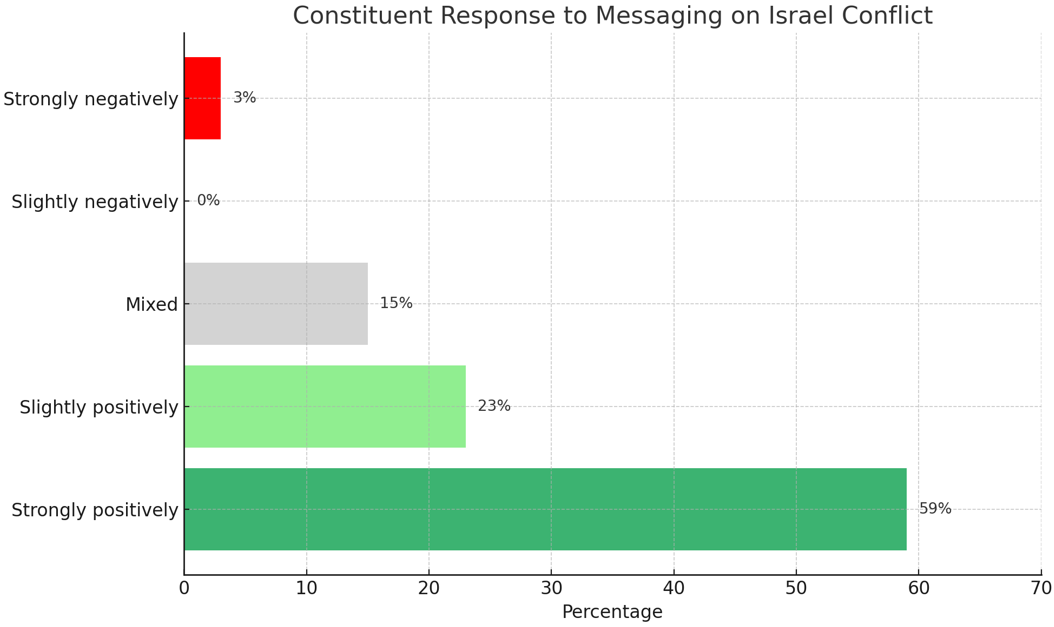
These results demonstrate that most organizations are striking a tone and message that aligns with the sentiments of their constituents. However, the presence of mixed and strongly negative responses — though limited — underscores the importance of continued sensitivity, clarity, and inclusivity in communication, especially when addressing complex geopolitical issues that may stir strong emotions within diverse Jewish communities.
Section 6: Blueprint for Our Future (Community Study): Use, Benefit and Application
The 2022 Jewish Community Study—A Blueprint for Our Future—has served as a valuable reference for many organizations in planning, programming, and strategy. This section explores how the study has informed decision-making, shaped priorities, and inspired outreach to underserved populations. While not yet universally utilized, the Blueprint is increasingly viewed as a key resource for data-informed leadership and collaborative communal growth.
Has your organization used the 2022 Jewish Community Study: A Blueprint for Our Future, to inform your decision making, strategic planning, programming, or setting priorities?
The 2022 Jewish Community Study was designed to serve as a strategic resource for guiding communal priorities, programming, and planning. However, survey responses suggest that while awareness of the study exists, its integration into organizational decision-making has been uneven. A majority of respondents (51%) reported using the study only occasionally or infrequently, and an additional 18% have not used it at all. Only 21% of respondents reported frequent (15%) or extensive (6%) use, while 10% were not familiar with the study at all.
These results suggest that although the study was intended to be a foundational planning tool, it has not been fully embraced as such across the community. The limited frequency and depth of its use may point to a need for greater dissemination, training, or alignment between the study’s insights and the practical needs of local organizations. Future efforts might focus on promoting the relevance of the study's findings and equipping organizations with tools to better apply them in their strategic work.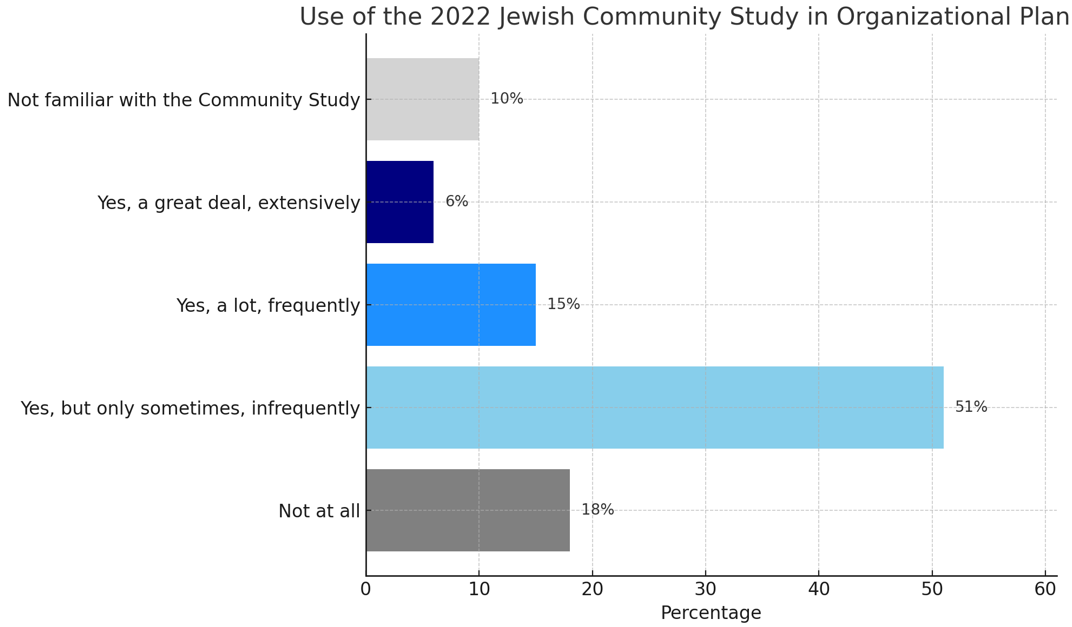
Please explain how the Jewish Community Study: A Blueprint for Our Future, has influenced your organization’s planning, strategies, approaches, or programs, to serve target populations:
The responses reflect a spectrum of engagement with the 2022 Jewish Community Study, ranging from active integration into planning and strategy to limited awareness or use. While some organizations have leveraged the study to guide decisions and better serve target populations, others noted minimal impact—either due to a lack of relevance, specificity, or familiarity. The most common themes include:
Limited or No Use of the Study
Many organizations reported either not using the study at all or using it only occasionally. Reasons varied, including:
Lack of awareness or familiarity with the study.
Perceived lack of applicability to their specific population, mission, or geographic focus (e.g., national organizations or synagogues outside the core San Diego area).
No current infrastructure, resources, or strategic processes in place to apply the findings meaningfully.
Informing Strategic Planning and Evaluation
A number of organizations have used the study to shape high-level priorities and long-term goals, including:
Guiding the creation or refinement of strategic plans.
Influencing resource allocation, fundraising messaging, and program evaluation.
Shaping discussions around how to reach and serve underserved populations.
Some noted the study helped frame conversations about community-wide needs and gaps.
Targeted Program Development
Several respondents shared how the study helped in identifying or validating specific areas of focus, including:
Developing initiatives for young families, early childhood, and teens.
Planning inclusive programming for LGBTQ+ individuals, older adults, and new community members.
Using demographic insights to design relevant outreach or engagement strategies.
A few mentioned using the study’s insights on mental health and barriers to participation to inform program direction.
Data-Informed Mindset and Cultural Shift
For some, the study had a broader impact beyond specific programming:
Inspired internal data collection efforts or local community censuses.
Sparked a cultural shift toward evidence-based planning and evaluation.
Encouraged leadership and staff to deepen their understanding of the broader Jewish landscape.
Some credited the study with fostering inter-organizational conversation and collaboration.
Minimal Practical Impact Despite Awareness
A handful of respondents indicated that while they are aware of the study and value its insights, it has not tangibly influenced their decisions. Examples include:
Keeping a copy on hand for reference, but not integrating it into operations.
Seeing the value in theory, but finding the findings too general or disconnected from their unique circumstances.
Finding it helpful for staff development or board education more than for direct planning.
While the Jewish Community Study has served as a valuable resource for some organizations—particularly in strategic planning and identifying population-specific needs—its overall use remains inconsistent. Many organizations expressed a desire or intention to do more with the findings, but cited barriers such as lack of familiarity, perceived relevance, or actionable next steps. A number of respondents asked for additional support or clearer guidance on how to apply the study’s findings effectively. Moving forward, increased dissemination, targeted training, and facilitated discussion may help more organizations translate the study’s insights into practical, community-serving outcomes.
Which priority areas from the 2022 Jewish Community Study have been most relevant to your work:
Survey responses show that many organizations have found key themes in the Community Blueprint highly applicable to their programming and strategic focus. While the range of priority areas selected was broad, certain themes clearly emerged as the most consistently cited, reflecting pressing communal needs and strategic alignments.
Most Frequently Cited Priority Areas
A. Connection and Engagement (25 organizations)
This was the most frequently cited priority, highlighting the widespread focus on fostering stronger interpersonal and communal relationships. Organizations are prioritizing outreach, participation, and social connection across age groups.B. Jewish Identity and Belonging (22 organizations)
This theme reflects a strong communal interest in nurturing Jewish values, spirituality, and cultural continuity, especially amid rising antisemitism and global tensions. Programs supporting inclusive and affirming Jewish experiences appear to be central.C. Security and Safety (17 organizations)
Security remains a top priority, likely reflecting increased concerns about antisemitism and physical safety. Many organizations, regardless of size or focus, reported investments in safety planning and partnerships.D. Connections to Israel (17 organizations)
Despite its political sensitivity, Israel remains a central focus for many, especially in educational, cultural, and advocacy work. Organizations often cited Israel connection in combination with identity-building and security priorities.E. Philanthropy and Volunteerism (13 organizations)
Many organizations are channeling energy into cultivating generosity and communal responsibility, using this theme to strengthen engagement, fundraising, and service-oriented programs.F. Jewish Education (13 organizations)
Still a strong priority for many institutions, especially those working with youth and families, this theme often overlapped with identity and engagement work.G. Mental Health and Wellness (9 organizations)
Organizations cited increasing concern for mental health, particularly for youth, families, and vulnerable populations. This reflects the community’s growing emphasis on holistic wellbeing post-pandemic and amid ongoing global tensions.H. Intergenerational Connection (6 organizations)
This priority was cited by those aiming to bridge generational divides, strengthen family involvement, and create age-inclusive programming.I. Financial Well-Being (6 organizations)
This was occasionally mentioned in the context of affordability, accessibility, or guiding support to families facing economic pressures.J. Social Services Needs (5 organizations)
Although less frequently mentioned, organizations serving vulnerable or underserved populations highlighted this area as essential to addressing poverty, food insecurity, and housing.K. Congregational and Ritual Practices (4 organizations)
This area was most relevant for synagogues and institutions focused on worship and spiritual life."None" Responses:
Approximately 9 organizations explicitly selected “None,” reflecting either a lack of alignment with the study's categories or limited organizational capacity or engagement with the Blueprint.
The data clearly show that community connection, identity-building, and security are the top concerns guiding Jewish organizations in San Diego. These core pillars align with trends seen throughout the broader survey, including increased attention to antisemitism, mental health, and generational engagement.
While some lower-frequency areas like financial well-being and ritual practice were less emphasized overall, they still play a role in specific organizational missions. The recurring selection of "none" may suggest gaps in awareness, applicability, or perceived relevance of the Blueprint for certain institutions.
The Blueprint appears to have had the greatest resonance where it intersects with engagement, safety, identity, and Israel connection—areas that also reflect community anxieties and aspirations in today’s challenging environment. There is an opportunity to continue bridging the Blueprint’s data with practical applications for organizations less engaged or uncertain of its relevance.
What were the most important take-aways for your organization from the 2022 Jewish Community Study: A Blueprint for Our Future:
Survey respondents reflected on the most valuable insights from the Jewish Community Study, revealing several key themes that informed their perspectives on demographics, engagement, identity, and strategic planning. While a few noted they hadn’t used the study or were unfamiliar with it, most respondents identified clear points of resonance that continue to shape their organizational priorities.
Themes:
A. Community Demographics & Geography
Several organizations highlighted the importance of knowing where Jewish families live, how large the population is, and how it's evolving:
Widespread recognition of slowing or declining growth in the Jewish population.
Realization of the highly educated and generally liberal profile of San Diego’s Jewish community.
Awareness of low affiliation and participation in traditional practices.
These insights help institutions tailor outreach, reconsider assumptions, and better understand how to serve unaffiliated or marginally engaged Jews.
B. Connection to Israel
Mentions of Israel were frequent, particularly regarding:
Pre- and post-10/7 connection strength.
Affirmation of Israel’s relevance and the need to sustain or deepen that connection.
Organizations saw Israel education and solidarity programming as central to community engagement, especially during crises.
C. Engagement, Belonging & Identity
A recurring theme was the need to create a sense of belonging, reach unaffiliated members, and design inclusive, identity-affirming programming:
Desire to serve diverse and nontraditional Jewish paths.
Need for personal invitations and strong relational engagement to encourage participation.
These insights are being used to design welcoming, inclusive programs and to guide outreach efforts to marginalized populations.
D. Strategic and Programmatic Implications
Several respondents mentioned that the study:
Validated their anecdotal observations.
Prompted reflection on resource allocation and community priorities.
Inspired more intentional focus on intergenerational programming and non-traditional education paths.
This points to the study’s practical value in refining strategic plans and prioritizing new initiatives.
E. Barriers to Participation
Interestingly, some respondents expressed surprise at:
The low percentage citing cost as a barrier.
The lack of awareness or low participation rates despite available programming.
This challenges assumptions and underscores the importance of personal connection, relevance, and messaging in driving attendance.
F. Organizational Gaps and Limitations
A few respondents noted:
They were unaware of the study or hadn’t used it.
Information was filtered through other staff.
Some insights seemed "just nice to connect" but didn’t drive significant change.
These responses indicate missed opportunities for integration or dissemination of the study’s findings.
The Community Study provides a vital mirror to the San Diego Jewish community—illuminating who it is, what it values, and where gaps exist. For many, the study confirmed prior instincts while giving language and data to support action. However, others noted a need for deeper engagement with the findings to translate insights into impact.
Organizations most valued the study’s demographic insights, its emphasis on connection and belonging, and the validation it provided for strategic pivots. Going forward, broader and more systematic integration of the study’s findings could help unify communal vision, reduce duplication, and strengthen outreach across diverse populations.
If you could ask one question to help inform your work, what would it be?
The open-ended responses to this question reveal a community of leaders eager to address challenges around engagement, relevance, connection, and inclusion. While some respondents were unsure how to answer, most posed thoughtful, strategic, and heartfelt questions that reflect both broad institutional concerns and individual organizational missions. Below is a summary categorized by key themes:
Community Engagement & Belonging
Many respondents asked how to engage more people—especially those who are unaffiliated, disconnected, or underserved:
How do we engage more Jews—especially families, younger demographics, and the unaffiliated?
What does belonging feel like?
Are people looking to join communities or Jewish organizations? If so, what are they seeking?
These questions reflect a persistent and urgent concern about inclusivity and connection. Leaders want to understand what motivates involvement and how to foster deeper belonging across diverse subgroups.
Israel & Identity
Several questions focused on understanding evolving attitudes toward Israel, particularly post-October 7:
Do you care about Israel’s safety and her relationship with the U.S.?
How do Jewish college students view Israel today?
Would you answer the same about Israel now, post-Oct. 7?
These responses point to the desire to understand shifting political and emotional relationships to Israel, especially among younger generations, and how these affect Jewish identity and communal involvement.
Program Strategy & Institutional Relevance
Respondents raised strategic planning questions such as:
What initiatives have moved the needle in San Diego?
How do we avoid duplicating efforts between organizations?
How can we ensure our institutions remain relevant and inclusive?
There’s a clear interest in greater coordination, shared learning, and accountability across the community. Respondents want impact, not just activity.
Accessibility & Affordability
Affordability was another theme, with respondents asking:
How can Jewish life (schools, camps, programs) become more affordable?
What are the barriers to Day School enrollment?
Why don’t more families send their children to Jewish camps?
Economic access to Jewish life remains a pressing concern, especially as costs rise and families weigh participation against financial constraints.
Antisemitism & Safety
A few respondents voiced concern about communal response to antisemitism:
Why don’t Jews take rising antisemitism seriously enough?
How can we market more effectively without attracting harmful attention?
These concerns reflect a balance leaders must strike between visibility and vulnerability—wanting to engage more boldly while remaining safe.
Donor Strategy & Impact
Several questions addressed philanthropy:
What do donors need to make their giving more impactful?
How can we better market to different generations?
Organizations are seeking ways to align their goals with donor interests and values, ensuring mutual benefit and long-term support.
Demographics & Data Needs
Some leaders want better data to guide their work:
Where are the Jewish people in San Diego geographically?
What does our community need most right now?
Would we benefit from a North Inland County-specific study?
These reflect an appetite for more granular, localized, and up-to-date community data to refine outreach and programming.
These responses underscore a shared commitment to improving engagement, relevance, inclusion, and impact in Jewish communal life. The dominant themes—belonging, affordability, strategy, Israel, and data—mirror the challenges surfaced throughout the study, pointing to a community eager for insight, collaboration, and action. Collectively, these questions offer a valuable roadmap for shaping future research, conversations, and strategic initiatives.
Section 7: Vision and Future Outlook
Looking ahead, organizations shared both their concerns and aspirations for the Jewish future in San Diego. This section highlights pressing issues such as assimilation, affordability, security, and institutional sustainability, while also showcasing community priorities around engagement, inclusivity, Israel education, and intergenerational connection. Despite challenges, leaders expressed strong hope rooted in collaboration, resilient leadership, youth engagement, and a shared commitment to building a vibrant and inclusive Jewish future.
What are your biggest concerns for the future of the Jewish community in San Diego?
The responses to this question reveal a rich, candid, and often deeply personal view of what Jewish leaders and community members see as the most pressing threats to Jewish continuity in San Diego. Despite a few expressing optimism and confidence, the overwhelming tone is one of concern—rooted in cultural shifts, financial pressures, and rising insecurity. The key themes, ranked by frequency and emphasis, are as follows:
Assimilation, Intermarriage & Declining Affiliation
A dominant concern was the erosion of Jewish identity and engagement, especially among younger generations. Respondents mentioned:
Assimilation and intermarriage as reducing Jewish continuity.
Shrinking synagogue membership and dropping affiliation rates.
A move away from institutional involvement or traditional pathways to Jewish life.
This reflects national trends, where younger Jews often seek cultural, not religious, engagement. The data underscores the need for alternative entry points into Jewish life beyond synagogue affiliation.
Cost of Living & Financial Barriers
Many cited San Diego’s high cost of living as a major threat to Jewish communal vibrancy:
Families cannot afford Jewish day schools, camps, or housing.
Financial stress on community members and Jewish professionals.
Fear of outmigration, especially among younger adults and future leaders.
Economic hardship is not just a personal issue—it has wide-reaching implications for access to Jewish education, participation, and leadership development.
Antisemitism & Security
Respondents expressed growing concern about:
Rising antisemitism and hate globally and locally.
Perceptions that the Jewish community is not responding seriously enough.
The emotional and physical toll on Jewish identity and visibility.
Antisemitism was linked not only to fear but also to disengagement, as some individuals become wary of public affiliation or activism.
Fragmentation & Lack of Unity
Several noted:
Community infighting, political polarization, and divisiveness.
A lack of shared vision or coordinated effort across institutions.
Organizational “silos” that hinder collaboration and impact.
Respondents want more unity and partnership—across denominations, geographies, and generations. There’s a call for a cohesive, collaborative community strategy.
Engagement & Belonging
Concerns were raised about:
How to reach unaffiliated Jews or those alienated from traditional institutions.
A perceived lack of belonging, especially among interfaith, LGBTQ+, and geographically distant populations.
Generational disconnects in values, modes of participation, and definitions of Jewish identity.
These responses reinforce the need for pluralistic, accessible models of engagement that foster both individual meaning and communal inclusion.
Donor Base & Institutional Sustainability
Some worry about:
An aging donor base and decline in financial support.
Limited resources for day schools, synagogues, and non-profit professionals.
Organizational sustainability in the long term.
The future of Jewish institutions in San Diego will depend on both diversifying funding and demonstrating relevant, measurable impact.
Demographic & Geographic Dispersion
Concerns included:
The geographic sprawl of San Diego, making centralized engagement difficult.
Inadequate awareness or inclusion of North County Jews or non-centralized synagogues.
Place-based engagement may need to evolve, with decentralized strategies or mobile programming better suited to local realities.
Outliers: Optimism and Pride
While most responses reflected concern, a few noted:
Confidence in the community’s strength and unity.
Appreciation for the work already being done.
A focus on staying “aware and focused” to continue positive momentum.
The concerns voiced by respondents present a complex but coherent picture of a Jewish community at a crossroads—confronting familiar national trends (assimilation, affordability, antisemitism) while also grappling with uniquely local issues (cost of living, geographic dispersion).
Some of the concerns, such as antisemitism and security, the high cost of living, and financial barriers to access, are well-founded and supported by the data. But others, such as the concerns about decreased engagement and community fragmentation, although valid, are not reflected in current trends. Multiple organizations reported an increase in collaboration, especially post October 7, and 79% of organizations report an increase in engagement. The perception of community fragmentation may be residual or based on past dynamics, but the current data shows a strong trend toward unity and collaboration, especially around Israel, security, and youth engagement.
But at the heart of many responses lies a shared desire: to preserve a vibrant, inclusive, and secure Jewish future in San Diego. Meeting these concerns will require cross-institutional collaboration, innovative engagement strategies, and an honest reckoning with the evolving definitions of identity, belonging, and community.
What are your top three priorities related to promoting engagement, connection, and belonging, for the next 3 years?
The responses to this question offer a dynamic and multifaceted roadmap of how Jewish organizations in San Diego envision their strategic focus over the coming years. From concrete goals like increasing membership to broader cultural aims such as inclusivity and intergenerational connection, the responses highlight both the diversity and alignment of community priorities.
Engagement of Families, Youth, and Young Adults
By far the most frequently cited priority, organizations emphasized outreach and programming for:
Young families: attracting and retaining them, especially post–early childhood years.
Children and teens: strengthening religious school, youth movements, and prosocial Jewish identity-building.
Young adults and college students: ensuring continued Jewish connection post-graduation.
This reflects a widespread understanding that early engagement is crucial for long-term Jewish connection. Several organizations linked this to future leadership development and community sustainability.
Membership Growth and Financial Sustainability
Respondents frequently listed:
Growing or stabilizing membership bases.
Enhancing donor engagement and retention.
Increasing awareness of organizational missions and impact.
There is a clear tension between financial sustainability and engagement goals. Many respondents recognize that deepening relationships—not just fundraising—will be key to long-term viability.
Israel Education and Advocacy
A recurring theme was:
Strengthening affinity for Israel.
Promoting awareness of the U.S.-Israel relationship.
Engaging the next generation meaningfully around Israel and antisemitism.
Particularly in light of Oct. 7, Israel engagement has re-emerged as a central organizing priority. Many aim to connect this to broader Jewish identity and belonging.
Inclusive and Intergenerational Community Building
Numerous respondents prioritized:
Programs for LGBTQ+, elderly, interfaith, and low-income Jews.
Intergenerational programming to bridge divides.
Ensuring community feels welcoming and relevant across identity and life stages.
This reflects growing awareness that belonging isn’t one-size-fits-all. Organizations are striving to meet people where they are—with tailored, meaningful experiences.
Educational Programming & Jewish Literacy
Responses included:
Jewish education reform and innovation (especially around Torah, values, and tradition).
Parent/grandparent engagement in educational initiatives.
Enhancing religious school quality and relevance.
Education is not limited to children—there’s a strong push for adult learning and cultural engagement as entry points into deeper Jewish life.
Strategic Collaboration and Shared Resources
Several mentioned:
Cross-organizational partnerships.
Avoiding duplication of efforts.
Building new community infrastructure together (e.g., shared hubs or events).
There is a growing appetite for collaborative frameworks. Organizations see value in leveraging each other’s strengths to increase collective impact.
Social Services and Support for Vulnerable Populations
Less frequently but significantly, some noted:
Addressing Jewish poverty and mental health.
Expanding support for families and elderly Jews at risk.
Social service priorities often emerge through data like the Community Study. Respondents integrating these issues show commitment to holistic community care.
These responses reveal a community deeply engaged in introspection and action. The overarching priorities—youth engagement, inclusivity, education, and collaboration—demonstrate a proactive approach to sustaining Jewish life in San Diego. However, challenges such as financial sustainability, political polarization, and cultural shifts persist in the background. Organizations are clearly trying to adapt to a changing landscape, aiming to balance tradition with innovation, and structure with flexibility. The next three years will likely be a test of both strategic foresight and communal resilience.
Describe how you see your organization’s relationship/connection to Israel in the next 3 years.
The responses reveal a resoundingly strong and affirmative outlook regarding San Diego Jewish organizations’ relationships with Israel over the next three years. The sentiments expressed range from deepening existing ties to expanding educational, cultural, and interpersonal bridges between local communities and Israel.
Continuity and Strengthening of Support
The overwhelming majority of organizations stated their connection to Israel would remain strong, unwavering, or even grow stronger over the next three years. Many emphasized:
Enduring Zionist identity as core to mission and values.
Continued or expanded fundraising for Israeli causes.
Support for Israeli citizens relocating to San Diego.
Frequent delegation or travel to Israel, including community trips, student visits, or gap year promotion.
There is a shared, active commitment to Israel, not just as a cause, but as a deeply embedded part of organizational identity. This includes both symbolic and tangible support.
Education and Youth Engagement
Multiple organizations are investing in:
Israel education programs, particularly for youth and college students.
Curricular integration of Israeli culture, history, and politics.
Promotion of gap year or summer programs in Israel.
The emphasis on youth-centered education underscores a forward-looking strategy. Organizations are clearly working to instill lasting connections in younger generations through immersive and identity-forming experiences.
Cultural and People-to-People Exchange
Many responses highlighted:
Hosting Israeli fellows or staff, especially in camps and schools.
People-to-people partnerships, including with Israeli cities like Sha’ar HaNegev.
Visiting Israeli families or soldiers in San Diego, often through social service support.
These exchanges suggest that beyond political or financial ties, relational and communal bonds are being prioritized as essential to modern Diaspora-Israel relationships.
Expanding Definitions of Zionism
A few organizations reflected a more nuanced and introspective tone, noting:
A need for open conversations around Zionism’s evolving meaning.
Balancing political complexity with moral clarity and Diaspora values.
Creating spaces for dialogue and intellectual engagement around Israel.
These voices indicate a maturing approach—one that values unity but not uniformity, and seeks to define connection to Israel beyond partisanship or simplistic narratives.
Institutional Integration
Some organizations noted efforts to:
Embed Israel engagement into strategic planning, communications, and long-term program design.
Merge Israel education with broader organizational missions (e.g., Jewish identity, resilience, security, belonging).
This indicates that connection to Israel is not isolated to singular programs but is being woven into the fabric of institutional identity and planning.
San Diego’s Jewish organizational landscape reveals an enduring and evolving relationship with Israel—rooted in historical ties, bolstered by educational and cultural exchange, and attuned to the shifting needs of both local and global Jewish communities. While the majority express unshakable support and deepening connection, a small but important segment is engaging with complexity and exploring broader definitions of modern Zionism. Collectively, these responses suggest that Israel will continue to be a central axis of identity, purpose, and engagement for the community.
What gives you hope or optimism about the future of Jewish life in San Diego?
Responses to this question reflect a deep reservoir of hope, pride, and optimism within San Diego’s Jewish community. Despite real concerns voiced elsewhere, participants in this survey highlighted a wide range of reasons for confidence in the community’s vitality, resilience, and future growth.
Strong Sense of Community and Unity
Many respondents expressed optimism based on the strength, warmth, and cohesion of the community. Themes included:
The presence of strong relationships between individuals and organizations.
A united front, particularly after crisis moments like October 7.
An enduring desire to belong, be heard, and grow together.
Respondents recognize a growing sense of interconnectedness that transcends organizational silos. This sense of shared purpose appears foundational to future progress.
Leadership and Institutional Infrastructure
A recurring source of hope lies in the dedication and talent of current leaders, and their ability to mentor future generations:
Praise for rabbis, executives, and lay leaders who are driving engagement.
Optimism rooted in the strength and resilience of institutions like synagogues, schools, and nonprofits.
A vibrant ecosystem of experienced and emerging leaders gives participants confidence that the community is well positioned to navigate change and innovate effectively.
Youth Engagement and Future Generations
Numerous respondents cited Jewish youth as a primary reason for optimism:
Teens and students described as “amazing,” “caring,” and committed to Jewish identity.
Belief in the transmission of tradition and values from older to younger generations.
Excitement about engaging young families, despite challenges such as cost.
While many respondents voice concerns elsewhere about youth disengagement, here we see clear indicators that the presence and promise of younger generations remain a bright spot.
Organizational Collaboration and Partnerships
Another major theme was increased cooperation between institutions:
Respondents described a new wave of collaboration, particularly among organizations like JCF, JFSD, ELI, ADL, and SCN.
Recognition that shared resources and missions are key to maintaining momentum.
Cross-sector partnerships are being framed not only as practical solutions but also as cultural shifts toward greater mutual support and alignment.
Spiritual, Cultural, and Geographic Growth
Several responses pointed to growth in specific areas:
Chabad expansion, Orthodox community consolidation in San Carlos, and broadening access to spiritual life.
The development of community-wide events across geographically dispersed Jewish populations.
Excitement about programming that blends spiritual, educational, and social elements.
Growth is seen both in terms of numbers and reach. The geographic spread of Jewish life in San Diego is no longer seen as a limitation but as a field of opportunity.
Resilience in Adversity
Finally, a few respondents directly cited community response to crisis as a powerful sign of strength:
October 7 brought about increased attendance, donor support, and solidarity.
This catalyzed a renewed sense of purpose and urgency.
While fear and fatigue exist, moments of adversity have mobilized the community and served as unifying catalysts for engagement and belonging.
The San Diego Jewish community appears deeply hopeful about its future, anchored by strong leadership, engaged youth, growing collaboration, and enduring Jewish values. Respondents highlight that even amid financial or social challenges, the underlying commitment to community, tradition, and collective progress remains robust. This optimism is not blind—it is grounded in observed strength, tested relationships, and a willingness to adapt and grow.
Finally, is there anything that we forgot to ask you about? Please elaborate.
This final prompt offered respondents the opportunity to surface unmet needs, reflect on the process, or add context that may not have been addressed elsewhere. The responses—while generally brief—revealed a few key themes:
Appreciation and Positive Feedback
The majority of respondents used this space to express gratitude and affirmation for the effort and opportunity to participate:
“No and thank you.”
“Thanks for all this! I am sure it will be very interesting to see the takeaways.”
“Thank you.”
“This is great… always happy to talk more after the summer ends.”
These affirmations suggest that the process was well-received overall. Respondents felt heard, and several expressed interest in continuing the conversation beyond the survey.
Underrepresented Themes or Omissions
A handful of respondents pointed out topics they felt were missing, including:
Funding as a primary challenge: “You forgot to ask what is our biggest challenge… FUNDING.”
Workforce sustainability: “I am concerned about continued investment in talent.”
Jewish Renewal representation: One response noted that Jewish Renewal was not addressed or acknowledged.
These responses highlight a few critical blind spots—especially the need for deeper exploration of financial sustainability, workforce retention, and inclusivity across denominations or expressions of Judaism.
Offers of Partnership and Engagement
One organization offered direct support and expressed a desire to help further:
“You didn't ask how I/my organization can help... We’re so grateful... would love to continue to partner and help the community.”
This is a promising indicator of readiness for collaboration. Respondents aren’t just looking for support—they also want to give back and help shape solutions.
While most respondents had no additional input, those who did offered valuable signals about financial pressure, staffing challenges, denominational inclusion, and opportunities for collaboration. The high level of gratitude and engagement expressed in these closing comments reinforces the community’s openness, trust in the process, and desire to stay connected as planning and strategy evolve. These remarks suggest a strong foundation for ongoing dialogue and partnership building.
Conclusion and Final Observations
The 2025 Community Pulse Survey has provided a rich and nuanced portrait of San Diego’s Jewish organizational landscape—its aspirations, its challenges, and its unwavering commitment to cultivating meaningful Jewish life. Through the voices of dozens of organizations, a clear picture has emerged: while the community is diverse in structure and approach, it is united in purpose and deeply invested in its future.
A Community Engaged and Reflective
Across the survey, we heard from a broad cross-section of organizations representing education, worship, social services, youth, seniors, LGBTQ+ advocacy, and more. Many reported actively using the 2022 Jewish Community Study: A Blueprint for Our Future to inform their strategic planning, program development, and engagement efforts. Others acknowledged that while they had not yet engaged deeply with the study, they recognize its potential value and expressed interest in further integration.
The priority areas most relevant to their work—including Jewish identity and belonging, connection and engagement, and security—reflect a continued focus on both the heart and infrastructure of Jewish life.
The comments reflected throughout the PULSE Survey highlight an important truth: community-building is an ongoing conversation. This Pulse Survey was not intended as a final word—but as a tool to take stock of where we are now, and to guide future investment, connection, and support.
Final Thoughts
The survey responses reflect both the vibrancy and complexity of Jewish life in San Diego. It is clear that our community organizations are deeply committed to their missions, even as they navigate external pressures and internal evolution.
There is strength in the shared values that emerged from this survey—values rooted in belonging, resilience, identity, and collective responsibility. As we move forward together, let this Pulse Survey serve as both a mirror and a map: a reflection of who we are today, and a guide to where we might go—stronger, more connected, and more inclusive than ever before.
Thank you to every organization that participated. Your insights are invaluable—and your voices are shaping the future of Jewish life in San Diego.
Appendix A: Participating Organizations
List of organizations that completed the San Diego Jewish Community PULSE survey
AIPAC
Aish San Diego
Camp Mountain Chai
Chabad of Downtown
Chabad of La Costa
Chabad of San Diego County
Chabad of University City
Chabad Youth Action Movement
Coastal Roots Farm
Congregation Beth Am
Congregation Beth El
Congregation Beth Israel
Congregation Dor Hadash
Friends of the Israel Defense Forces
Havurah Shir Ha Yam
Hillel of San Diego
IAC- Israeli American Council
Jewish Collaborative of San Diego
Jewish Community Foundation of San Diego
Jewish Family Service of San Diego
Jewish Federation of San Diego County
Jewish National Fund
Ken Jewish Community
Kindness Initiative
Kollel San Diego
Lawrence Family Jewish Community Center
Leichtag Foundation / The Hive
Ohr Shalom Synagogue
PeerK12
San Diego Hebrew Day
San Diego Jewish Academy
San Diego Jewish Experience
Seacrest Village Retirement Communities
Southern California Yeshiva High School
Temple Adat Shalom
Temple Beth Shalom
Temple Emanu-El
Temple Solel
Young Israel of San Diego
